Below are widely used food safety software programs that suit common Australian needs, from single-venue cafés to multi-site manufacturers.
What should Australian businesses look for in food safety software?
They should prioritise tools that match their risk level and operational complexity, not just the longest feature list. The right platform makes daily compliance easier, speeds up audits, and reduces the chance of missed checks.
Key things to look for include HACCP support, configurable checklists, temperature monitoring workflows, incident and corrective action logs, version-controlled documents, and clear reporting. It also helps if the platform supports multi-site permissions, offline mode for back-of-house areas, and fast evidence export for auditors. Learn more about food safety software programs to understand how digital systems streamline compliance and audit readiness.
Which programs are best for HACCP plans, records, and audit readiness?
HACCP Mentor is a strong pick for teams that want structured HACCP plan creation and compliance documentation. They typically use it to build or maintain HACCP-based programs and keep supporting records aligned.
Safefood 360° is often chosen by larger manufacturers needing deeper food safety management and audit support. They tend to use it for document control, CAPA workflows, supplier controls, and readiness for GFSI-aligned expectations.
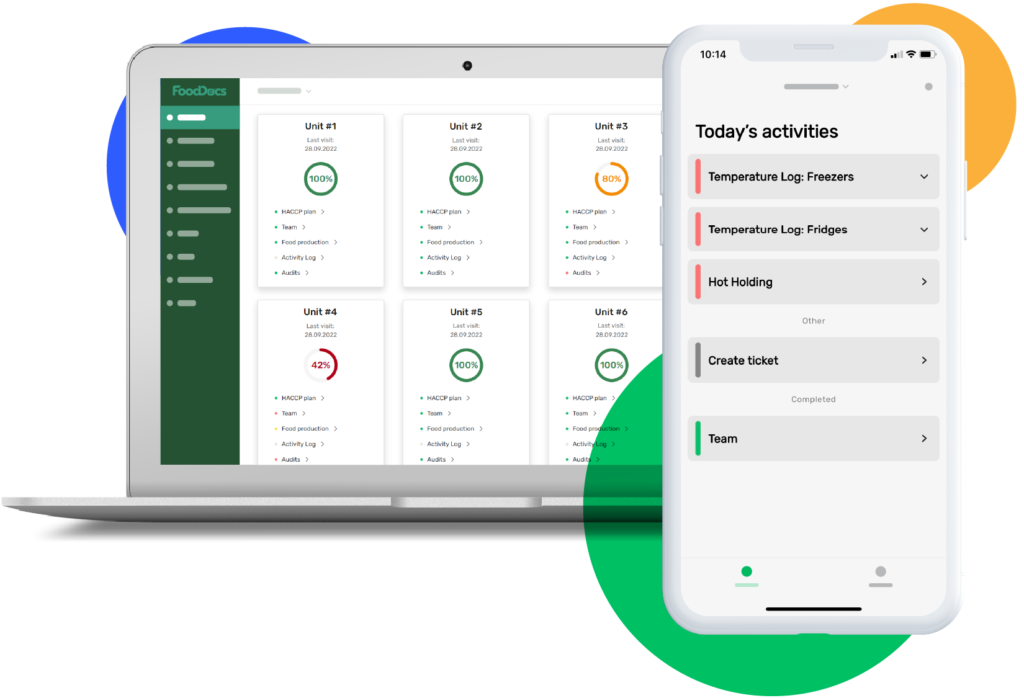
FoodDocs is commonly used by smaller teams that want quick HACCP plan generation and simpler digital records. They often choose it to replace spreadsheets with guided documentation and routine task tracking.
Which platforms work well for daily checklists and site-level compliance?
SafetyCulture (iAuditor) is widely used for digital inspections, checklists, and issue tracking. They typically adopt it to standardise daily opening checks, cleaning schedules, internal audits, and corrective actions across locations.
Lumiform is another checklist-driven option that suits teams wanting quick form builds and straightforward reporting. They often use it for hygiene inspections, cleaning verification, and recurring compliance tasks without heavy setup.
These tools usually shine when the main pain point is inconsistent execution on the floor rather than building a full end-to-end food safety management system.
What software suits temperature logs, monitoring, and corrective actions?
Jolt is commonly used for operational checklists and temperature logs, with strong task accountability. They typically choose it to ensure shifts complete checks on time, capture evidence, and trigger follow-ups when readings fall outside limits.
SafetyCulture (iAuditor) also performs well here when teams build temperature log templates and automate escalations through actions and reporting. They often prefer it when they want flexible templates and broad inspection coverage in one tool.
For sensor-based monitoring, many businesses pair software with compatible hardware or third-party integrations, depending on the site layout and critical control points.
Which options fit multi-site Australian operators and franchises?
Multi-site operators usually need role-based access, consistent templates, and reporting that rolls up to region and head office. They also benefit from centralised document control and change tracking so every site uses the same current procedures.
SafetyCulture (iAuditor) is often adopted for multi-site visibility because they can deploy standardised audits and compare results across sites. Safefood 360° is commonly selected when the organisation needs deeper governance, supplier controls, and formal CAPA management across a wider compliance program. These platforms are frequently evaluated under multi-site food safety audit management and digital compliance systems for operational consistency and control.
The best fit depends on whether the business is primarily inspection-driven or running a full food safety management system.
How should Australian businesses choose between these programs?
They should start with the outcome they need most: faster audits, fewer missed checks, better traceability, or stronger governance. A simple rule is that checklist tools help execution, while full FSMS platforms help governance and formal compliance.
They should also validate practical details like mobile usability in back-of-house areas, offline access, evidence export, and how quickly managers can build templates. If they run multiple sites, they should test permissions, roll-up reporting, and how updates push to every venue.
What is a practical shortlist for different business types?
For cafés, restaurants, and smaller caterers, they often shortlist SafetyCulture (iAuditor) or Lumiform for daily checks and quick adoption. For growing groups that want operational discipline, they often add Jolt for strong task accountability and routine logs.
For manufacturers and higher-risk operations, they commonly shortlist Safefood 360°, HACCP Mentor, or FoodDocs, depending on how formal their HACCP and documentation requirements are. The best next step is usually a trial using real checklists and a mock audit export to confirm the workflow fits their team. This aligns with audit-ready food safety compliance steps used to structure validation, documentation, and readiness processes.
FAQs (Frequently Asked Questions)
What features should Australian businesses prioritise when choosing food safety software?
Australian businesses should prioritise food safety software that matches their risk level and operational complexity. Key features include HACCP support, configurable checklists, temperature monitoring workflows, incident and corrective action logs, version-controlled documents, clear reporting, multi-site permissions, offline mode for back-of-house areas, and fast evidence export for auditors.
Which food safety software programs are best suited for HACCP plans and audit readiness in Australia?
For HACCP plans and audit readiness, popular options include HACCP Mentor for structured HACCP plan creation and compliance documentation; Safefood 360° for larger manufacturers needing comprehensive document control, CAPA workflows, supplier controls, and GFSI-aligned audit support; and FoodDocs for smaller teams seeking quick HACCP plan generation with simpler digital records.
What software is ideal for managing daily checklists and site-level compliance in Australian food businesses?
SafetyCulture (iAuditor) is widely used for digital inspections, daily opening checks, cleaning schedules, internal audits, and corrective actions across multiple locations. Lumiform is another checklist-driven tool favored for quick form builds and straightforward reporting on hygiene inspections and recurring compliance tasks without heavy setup.
Which platforms effectively handle temperature logs, monitoring, and corrective actions?
Jolt is commonly chosen for operational checklists and temperature logs with strong task accountability to ensure timely checks and follow-ups. SafetyCulture (iAuditor) also excels by allowing flexible temperature log templates with automated escalations through actions and reporting. Many businesses complement these tools with sensor-based monitoring integrated via compatible hardware or third-party solutions.
What are the best food safety software options for multi-site operators and franchises in Australia?
Multi-site operators benefit from role-based access, consistent templates, centralised document control, and consolidated reporting. SafetyCulture (iAuditor) is often adopted for multi-site visibility due to its standardised audits and site comparison capabilities. Safefood 360° suits organisations requiring deeper governance, supplier controls, and formal CAPA management across broader compliance programs.
How can Australian businesses decide between checklist tools and full food safety management systems?
Businesses should start by identifying their primary needs—whether faster audits, fewer missed checks, better traceability, or stronger governance. Checklist tools like SafetyCulture (iAuditor) or Lumiform help with execution of daily tasks while full Food Safety Management Systems (FSMS) like Safefood 360° or HACCP Mentor provide comprehensive governance and formal compliance management. Practical considerations include mobile usability in back-of-house areas, offline access, evidence export capabilities, template building speed, permission settings for multiple sites, roll-up reporting features, and update distribution across venues.
What is wireless monitoring in food safety operations?
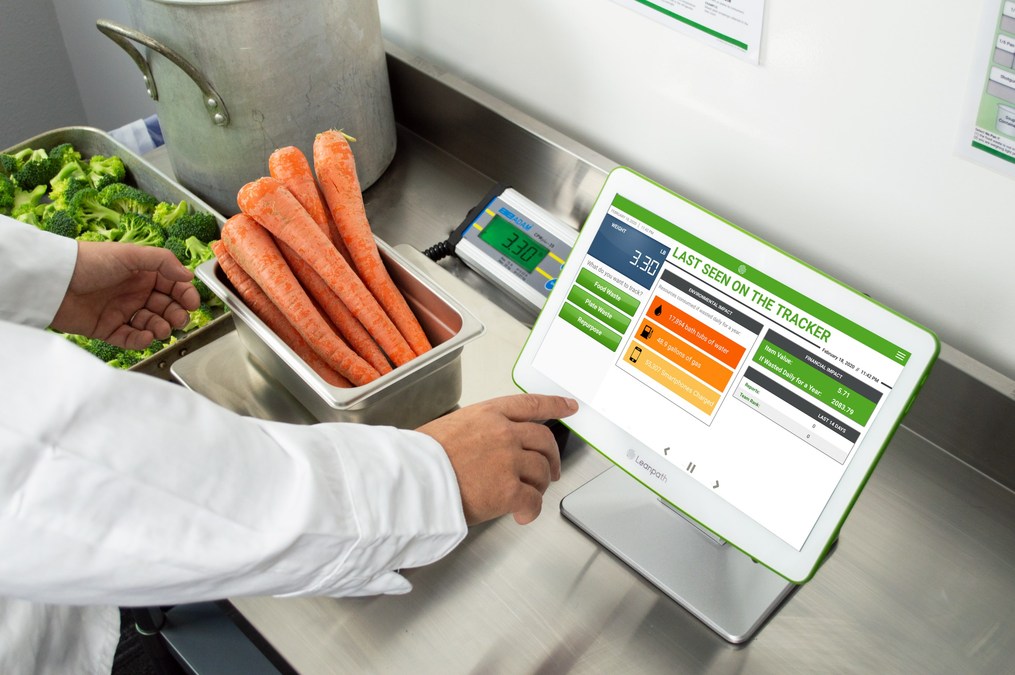
Wireless monitoring uses connected sensors to track conditions like temperature, humidity, and door activity in real time. The sensors send readings automatically to a dashboard, usually via Wi-Fi, cellular, or a gateway network.
For food safety teams, food safety software programs ensure consistency by capturing evidence continuously, storing it securely, and making it easier to retrieve during audits or investigations.
Why are manual temperature logs no longer enough?
Manual logs are easy to miss, easy to backfill, and often taken at the least risky moment of the day. Even when staff are diligent, spot checks cannot show what happened overnight, during deliveries, or between shifts.
Wireless monitoring fills that gap by capturing the full temperature history, which helps operations identify recurring issues like compressor cycling problems, frequent door openings, or thaw events.
How does wireless monitoring reduce food safety risk?
It reduces risk by shortening the time between a deviation and a response. When thresholds are breached, the system can alert staff immediately so they can move product, close a door, adjust set points, or call maintenance before food enters the danger zone for too long.
It also improves root cause analysis. If an incident occurs, teams can trace exactly when temperatures drifted, how long it lasted, and whether corrective actions brought conditions back under control.
What does “real-time alerts” actually look like in practice?
Real-time alerts typically arrive via SMS, email, push notification, or an on-screen alarm in a control room. The best setups route alerts by location and responsibility so the right person is notified, not everyone.
They also support escalation. If the first contact does not acknowledge the alert in a set time window, it can automatically notify a manager or a different team member.
Which areas benefit most from wireless monitoring?
Cold storage is usually the first priority: walk-ins, reach-ins, blast chillers, and freezers. These units store high-risk items and can fail silently for hours.
Hot holding and cook-chill workflows also benefit, especially where proof of control matters. Finally, distribution and last-mile transport gain value when teams need evidence that product stayed within limits from dock to destination.
How does wireless monitoring support HACCP and audit readiness?
It supports HACCP by strengthening monitoring and verification. Continuous records make it easier to demonstrate that critical limits were maintained and that deviations triggered corrective action.
For audits, it reduces the scramble. Instead of searching for paper logs, teams can filter by date, unit, and location, then export reports that show readings, alarms, acknowledgments, and corrective notes in one place.
What should teams look for when choosing a wireless monitoring system?
They should start with sensor accuracy, calibration options, and placement flexibility. A system that cannot be validated or maintained will create compliance headaches later.
Next comes connectivity reliability and offline buffering. Good systems keep collecting data during outages and upload automatically when connections return. They should also offer clear permissions, tamper-evident logs, and easy report exports that match how auditors ask for evidence.
What are the most common implementation mistakes?
A frequent mistake is deploying sensors without defining alarm thresholds and ownership. If nobody is responsible for responding, alerts become noise.
Another is poor sensor placement. Probes placed near fans, doors, or warm spots can misrepresent product conditions. Teams also underestimate change management, especially training staff to acknowledge alarms, document corrective actions, and use trends to prevent repeat issues.
How will wireless monitoring shape the future of smart food safety?
The future is less about collecting data and more about using it intelligently. As datasets grow, systems will help teams spot drift earlier, predict failures, and prioritize maintenance before breakdowns happen.
Wireless monitoring also enables standardization across multi-site operations. When every location uses the same thresholds, alert workflows, and reporting, leadership can compare performance fairly, reduce waste, and strengthen brand-wide compliance without adding administrative burden.
What is wireless monitoring in food safety operations?
Wireless monitoring uses connected sensors to continuously track conditions such as temperature, humidity, and door activity in real time. These sensors automatically send readings to a dashboard via Wi-Fi, cellular, or gateway networks, providing consistent and secure evidence that simplifies audits and investigations.
Why are manual temperature logs no longer sufficient for food safety?
Manual temperature logs are prone to being missed or backfilled and often capture data only during low-risk times. They fail to provide a complete temperature history, especially overnight or between shifts. Wireless monitoring fills this gap by offering continuous data, helping identify recurring issues like compressor problems or thaw events.
How does wireless monitoring reduce food safety risks?
Wireless monitoring reduces risk by enabling immediate alerts when temperature or other thresholds are breached. This allows staff to respond quickly—such as moving products or calling maintenance—before food enters the danger zone. It also supports root cause analysis by detailing when deviations occurred and how corrective actions restored safe conditions.
What do real-time alerts look like in wireless food safety monitoring systems?
Real-time alerts commonly arrive via SMS, email, push notifications, or on-screen alarms. Advanced systems route alerts based on location and responsibility to notify the right person and support escalation protocols if initial contacts don’t acknowledge them promptly, ensuring timely responses to critical issues.
Which areas of food operations benefit most from wireless monitoring?
Cold storage units like walk-ins, reach-ins, blast chillers, and freezers benefit greatly due to their high-risk contents and potential silent failures. Hot holding and cook-chill workflows also gain value for proof of control. Additionally, distribution and last-mile transport benefit by providing evidence that products remained within safe limits throughout transit.
How does wireless monitoring support HACCP compliance and audit readiness?
Wireless monitoring strengthens HACCP programs by providing continuous records that demonstrate maintenance of critical limits and prompt corrective actions during deviations. For audits, it streamlines preparation by allowing teams to filter data by date, unit, or location and export comprehensive reports showing readings, alarms, acknowledgments, and corrective notes all in one place.
Many kitchens already “check temps,” yet inconsistent tools and rushed habits create risk. A dependable probe, used consistently, turns temperature checks into a simple, repeatable system the whole team can follow.
What makes a food temperature probe essential in a commercial kitchen?
A temperature probe gives an objective yes or no answer to the question that matters: is the food safe and properly cooked? It removes guesswork from visual cues like color, texture, or cooking time, which vary with equipment, portion size, and workflow.
It also supports consistency. A temperature monitoring device helps ensure the same doneness and safety standards across every shift, station, and menu item, even when different cooks are working the line.
How does a reliable probe reduce food safety risk?
Most foodborne illness risk in kitchens comes from time and temperature control. A reliable probe helps teams confirm that poultry, ground meats, reheated foods, and hot holding are actually reaching safe temperatures, not just “seeming” hot enough.
It also helps prevent partial cooking errors. If the center of a thick protein is under temp, the probe catches it early, before the plate reaches a customer or a batch gets mixed into a larger prep container.
Why is “close enough” temperature checking a costly habit?
“Close enough” invites rework, waste, and complaints. Overcooking to compensate for uncertainty dries out proteins, shrinks yield, and hurts food quality, which shows up in reviews and returns.
Undercooking is worse. It can trigger comped meals, discarded batches, incident reports, and reputational damage. A dependable probe is a low-cost tool that helps avoid high-cost outcomes.
How does a probe help with health inspections and compliance?
Inspectors want proof that a kitchen understands and controls critical limits. A reliable probe supports that expectation by enabling consistent checks during cooking, cooling, reheating, and holding.
When kitchens pair probe use with simple temperature logs, they can show a clear routine rather than scrambling to answer questions. That creates a smoother inspection and less disruption to service.
What role does a probe play in consistent quality and doneness?
Temperature is the most repeatable way to hit target doneness, especially for proteins that vary in thickness. A probe helps cooks deliver a medium burger that is actually medium, not a guess based on timing.
It also improves batch cooking. When teams roast trays, cook soups, or finish sous vide items, a quick probe check confirms the food is where it needs to be before it moves to holding or plating.
Where do commercial kitchens benefit most from probe checks?
They benefit most at the points where mistakes are common: receiving, cooking, cooling, reheating, and hot or cold holding. A probe confirms deliveries are arriving at safe temperatures, not just “cold to the touch.”
It also prevents unsafe cooling. Large pots, deep pans, and dense foods can stay warm in the center for hours. A probe helps teams verify cooling progress instead of relying on the clock alone. Learn more about : Wireless Monitoring: The Future of Smart Food Safety Operations
What features should a commercial kitchen look for in a temperature probe?
They should prioritize accuracy, speed, and durability. A fast response time matters during rush, because a slow probe gets skipped. A sturdy build matters because tools get dropped, washed, and handled with gloves.
They should also consider easy-to-read displays and simple controls. If the probe is frustrating to use, the team will avoid it. If it is straightforward, it becomes part of the routine.
How can teams build probe use into daily kitchen workflow?
They can make it standard at specific steps, not optional. For example, they can require a temperature check for every poultry batch, every reheated item, and every hot holding unit at set times.
They can also assign ownership. When each station knows what they check and when, probe use stops being “someone else’s job.” Short training and clear targets posted near stations help keep it consistent.
What is the bottom line on investing in a reliable food temperature probe?
A reliable food temperature probe protects customers, reduces waste, supports compliance, and improves consistency. It is one of the simplest ways a commercial kitchen can turn food safety into a repeatable habit instead of a last-minute scramble.
When kitchens treat temperature as a standard, not a suggestion, they run smoother and safer, even on the busiest services.
FAQs (Frequently Asked Questions)
Why is a food temperature probe essential in a busy commercial kitchen?
A food temperature probe provides an objective yes or no answer to whether food is safe and properly cooked, removing guesswork from unreliable visual cues like color or texture. It ensures consistency across different cooks, shifts, and menu items by helping maintain the same doneness and safety standards.
How does using a reliable temperature probe reduce food safety risks?
A reliable probe helps teams confirm that foods like poultry, ground meats, reheated items, and hot holding units reach safe temperatures, preventing time and temperature control issues that cause most foodborne illnesses. It also detects undercooked centers in thick proteins early, avoiding unsafe servings or batch contamination.
What are the consequences of ‘close enough’ temperature checking habits in kitchens?
Accepting ‘close enough’ temperatures leads to costly mistakes such as rework, waste, and customer complaints. Overcooking to compensate causes dry proteins and yield loss, while undercooking risks comped meals, discarded batches, incident reports, and damage to reputation. A dependable probe is a low-cost tool that prevents these high-cost outcomes.
How does consistent probe use support health inspections and regulatory compliance?
Inspectors expect proof that kitchens control critical temperature limits. Using a reliable probe consistently during cooking, cooling, reheating, and holding—paired with simple temperature logs—demonstrates routine compliance. This transparency facilitates smoother inspections with less disruption to service.
In what ways does a temperature probe improve food quality and consistency?
Temperature measurement is the most repeatable method to achieve target doneness, especially for variable thickness proteins. A probe enables cooks to deliver accurate doneness levels (e.g., medium burgers) rather than guessing by time alone. It also verifies batch cooking progress before holding or plating to maintain consistent quality.
Where should commercial kitchens focus their temperature probe checks for maximum safety benefit?
Kitchens benefit most by using probes at critical control points prone to mistakes: receiving deliveries (to confirm safe arrival temperatures), cooking, cooling (to prevent unsafe warm centers), reheating, and hot or cold holding. Probes help verify safe temperatures beyond subjective assessments like ‘cold to the touch’ or relying solely on timing.
Digital HACCP software matters most in busy operations where multiple sites, shifts, and suppliers create constant risk. It also helps leadership see trends early, before a minor deviation turns into waste, a recall, or a failed audit.
What is digital HACCP software, and what does it replace?
Digital HACCP software is a platform that digitises a HACCP plan and the daily records that support it. It replaces paper logs, spreadsheets, clipboards, and manual sign-offs with structured workflows, automatic prompts, and searchable evidence.
Instead of filing pages for temperatures, cleaning checks, allergen controls, and CCP monitoring, teams record them on phones, tablets, or fixed terminals. The software stores time stamps, user IDs, and supporting details in one place.
Why are paper HACCP records becoming a liability?
Paper systems fail when records are missing, illegible, backfilled, or stored in the wrong folder. Those gaps often appear during audits, customer visits, or investigations when evidence is needed quickly.
Paper also hides patterns. If a cooler drifts out of range twice a week, a binder rarely makes that obvious. Digital tools surface repeat deviations, late checks, and recurring corrective actions so managers can fix root causes sooner.
How does digital HACCP software improve day-to-day compliance?
It improves compliance by guiding staff through the right checks at the right time. Tasks can be scheduled by shift, role, site, or area, with reminders and escalation when something is overdue.
It also standardises how data is captured. Staff select from approved options, attach photos when required, and record corrective actions in the same format every time. That consistency reduces “creative logging” and makes reviews faster.
Which HACCP records can be digitised?
Most routine food safety records can be digitised without changing the HACCP principles. Common examples include:
CCP monitoring logs (cook, chill, metal detection, pH, aw, sieves)
Temperature checks (cold rooms, freezers, dispatch, display)
Calibration and verification records
Cleaning schedules and hygiene inspections
Allergen controls and label checks
Receiving checks and supplier approvals
Corrective actions and non-conformance reports
Training sign-offs and competency checks
The best systems let teams map records directly to hazards, CCPs, critical limits, and verification steps.
What features actually matter in a digital HACCP platform?
The most important features are the ones that prevent mistakes and make evidence easy to retrieve. Strong platforms usually include configurable forms, task scheduling, alerts, permissions, and audit-ready reporting.
Offline mode also matters in production areas with weak signal. So does simple UX, because a complicated interface pushes staff back to workarounds. Integrations can help too, especially for temperature sensors and ERP or QA systems.
How do automated sensors and alerts change HACCP monitoring?
Sensors reduce manual checks and catch deviations earlier. When a fridge warms overnight, a connected probe can trigger an alert before product is compromised, rather than being discovered hours later.
Alerts only help if the response is built into the workflow. Good systems document who acknowledged the alert, what action they took, and whether the issue was verified as closed. That turns “alarm noise” into traceable corrective action.
Can digital HACCP software make audits easier?
Yes, because it keeps records searchable and complete. During an audit, teams can pull the exact date range, site, CCP, product, or line and export evidence in minutes.
Auditors also tend to trust clean data trails. Time stamps, user logs, version control for procedures, and recorded verification steps all help demonstrate control. It becomes easier to show not only that checks were done, but that deviations were handled correctly.
What should they watch for when implementing digital HACCP?
They should treat implementation as a process change, not a software install. If procedures are unclear, digitising them will only create faster confusion.
The rollout works best when they pilot one site or one line, adjust forms to match real workflows, and then expand. Training should focus on why each record exists, what “good data” looks like, and how corrective actions should be documented.
How do they choose the right digital HACCP software?
They should choose based on fit, not feature lists. The right platform matches their operation type, risk profile, and team capability, whether they run retail food service, manufacturing, or multi-site distribution.
Key checks include: how easy it is to build forms, how reporting works, whether it supports their CCPs, and whether support is responsive. They should also confirm data ownership, export options, and how the vendor handles backups and uptime.
Is digital HACCP software the future of compliance?
Yes, because regulators, customers, and internal QA teams increasingly expect faster evidence and stronger traceability. Digital records make it easier to prove control, learn from trends, and scale safely across sites.
The future is less about replacing paper and more about preventing failure. When monitoring, verification, and corrective actions become connected and visible, food safety shifts from “record keeping” to real-time risk management.
FAQs (Frequently Asked Questions)
What is digital HACCP software and how does it improve food safety compliance?
Digital HACCP software digitises HACCP plans and daily records, replacing paper logs and manual sign-offs with structured workflows, automatic prompts, and searchable evidence. It guides staff through the right checks at the right time, standardises data capture, and reduces errors, making compliance easier to prove and manage.
Why are food businesses transitioning from paper-based HACCP records to digital systems?
Paper HACCP records often suffer from missing, illegible, or backfilled entries, making audits and investigations challenging. Digital systems provide complete, time-stamped records that reveal patterns like recurring deviations, enabling quicker root cause resolution and reducing risks of waste, recalls, or failed audits.
Which types of HACCP records can be effectively digitised?
Most routine food safety records can be digitised without altering HACCP principles. These include CCP monitoring logs (e.g., cook temperatures, metal detection), temperature checks for cold rooms and freezers, calibration records, cleaning schedules, allergen controls, supplier approvals, corrective actions, and training sign-offs.
What key features should I look for in a digital HACCP software platform?
Essential features include configurable forms tailored to your processes, task scheduling with reminders and escalations, user permissions for data integrity, audit-ready reporting capabilities, offline mode for weak signal areas, intuitive user experience to prevent workarounds, and integrations with sensors or ERP systems for seamless data flow.
How do automated sensors and alerts enhance HACCP monitoring?
Automated sensors continuously monitor critical parameters like temperature and trigger real-time alerts if deviations occur. When integrated into workflows that document acknowledgment and corrective actions, these alerts help prevent product compromise by enabling faster responses and creating traceable evidence of issue resolution.
Can digital HACCP software simplify audit preparation and improve audit outcomes?
Yes. Digital HACCP platforms keep comprehensive, searchable records with time stamps and user logs. During audits, teams can quickly retrieve exact data by date range or CCP. Clean data trails with version control and recorded verification steps build auditor trust by demonstrating consistent control and proper handling of deviations.
Multi-site food businesses often struggle because each location develops “local” methods over time. A strong program prevents drift by using shared standards, shared evidence, and site-specific risk checks.
What makes HACCP harder across multiple sites?
HACCP becomes harder because hazards, people, and processes vary by location even when products look identical. A fryer in one site, a different water supply in another, or different shift patterns can change risk.
The other challenge is proof. They must show consistent control everywhere, not just a good plan on paper at head office.
How should they structure governance for a multi-site HACCP program?
Organizations should implement a centralized haccp program while maintaining local accountability. Corporate teams define minimum standards, approve hazard analyses and CCP logic, and manage document version control within the haccp program framework.
Individual sites are responsible for on-the-ground execution. They conduct monitoring, implement corrective actions, perform local validations, and escalate any deviations. This approach ensures the haccp program remains consistent across the organization while accommodating site-specific operational realities.
What should be standardised across every site?
They should standardise the HACCP methodology, product and process definitions, hazard analysis criteria, CCP decision rules, critical limits, record formats, and training expectations.
They should also standardise supplier approval rules, allergen controls, sanitation program requirements, calibration rules, and internal audit checklists. These items are the backbone that prevents site-to-site variability from becoming uncontrolled risk.
What can be site-specific without weakening the program?
Site-specific items should be limited to genuine differences such as equipment models, layout, utilities, local ingredient substitutions, local regulatory requirements, and staffing patterns.
They can also allow site-specific preventive maintenance schedules and cleaning instructions if outcomes meet the same standards. The key is that differences are documented, risk-assessed, and approved through change control.
How do they build one hazard analysis that still fits multiple locations?
They should create a master hazard analysis for each product family and process flow, then add a site risk addendum. The master covers common steps, hazards, and controls, while the addendum captures local differences.
This avoids rewriting HACCP plans for every site while still showing that each location’s real hazards were considered and controlled.
How do they choose CCPs and critical limits that work everywhere?
They should define CCPs only where control is essential and measurable, then set critical limits based on scientific or regulatory evidence. Those limits must be achievable at all sites, using the least capable approved equipment.
If one site cannot meet a limit reliably, they should fix the capability gap or redesign the process. They should not lower limits just to match the weakest location.
How should monitoring and corrective actions be designed for consistency?
They should use the same monitoring frequencies, definitions, and record fields across sites. Monitoring must be simple enough to do on busy shifts and specific enough to detect loss of control.
Corrective actions should include three parts: regain control, isolate affected product, and prevent recurrence. They should require documented root cause when deviations repeat.
What role do prerequisite programs play in multi-site HACCP?
Prerequisite programs carry much of the real risk control in multi-site operations. Strong sanitation, allergen management, pest control, maintenance, supplier control, and training reduce the number of CCPs needed.
They should treat prerequisite program failures as HACCP-relevant. If sanitation breaks down, for example, they should have clear triggers for escalation, intensified verification, and product risk assessment.
How should they manage documentation and version control across sites?
They should maintain a single controlled document system with role-based access and clear version history. Sites should never “edit their own copy” of HACCP plans outside the system.
They should also define required records, retention times, and review cycles. Central teams can review trends, but site leaders should review daily records quickly enough to catch problems before product ships.
How can they verify sites are actually following the plan?
They should use layered verification: supervisor checks, QA verification, calibration reviews, internal audits, and periodic corporate audits. Verification should focus on evidence, not opinions.
They should also review data for patterns such as frequent near-misses, repeated corrective actions, or sites that always record perfect results. Perfect data often signals weak checking.
How do they roll out HACCP training across multiple locations?
They should train by role, not by job title. Operators need practical monitoring and corrective action training, supervisors need decision-making and escalation training, and managers need accountability and resource planning.
They should also validate training with observation and short competency checks. A sign-in sheet is not proof that people can run the controls correctly.
How should they handle changes like new products, new equipment, or new sites?
They should run formal change control for anything that could affect hazards or control measures. That includes new suppliers, recipe changes, packaging changes, equipment swaps, layout changes, and staffing model changes.
For new sites, they should complete a gap assessment against the master program, then conduct a commissioning validation before full production. They should not assume “copy and paste” equals control.
What are the quickest warning signs their multi-site HACCP system is failing?
Common warning signs include inconsistent records across sites, repeated deviations without root cause closure, heavy dependence on one person, and audits that only check paperwork.
They should also watch for uncontrolled local workarounds, undocumented ingredient substitutions, and rising customer complaints. These are often symptoms of a program that exists centrally but not operationally.
What does a practical first 30-day plan look like?
They should start by mapping products, sites, and process families, then selecting one process to standardise first. Next, they should confirm prerequisite program minimums and create consistent record templates.
They should then perform site walk-throughs to capture true process flows and differences, and they should fix obvious capability gaps such as missing thermometers, poor calibration habits, or unclear allergen segregation. After that, they can finalise the master HACCP plan and site addenda and begin verification.
FAQs (Frequently Asked Questions)
Why is building a HACCP program across multiple sites primarily a coordination challenge?
Building a HACCP program across multiple sites is mainly a coordination problem because hazards, people, and processes vary by location even when products appear identical. Differences like equipment models, water supplies, or shift patterns can change risk. The safest approach is to standardise what must be consistent and control what can vary with clear limits and verification to prevent local method drift.
How should governance be structured for an effective multi-site HACCP program?
Governance should balance central oversight with local ownership. Central teams set minimum standards, approve hazards and CCP logic, and control document versions. Each site owns execution by completing monitoring, corrective actions, local validations, and escalating deviations. This structure ensures system consistency while accommodating real operational differences.
What elements of a HACCP program must be standardised across all sites?
Key elements to standardise include the HACCP methodology, product and process definitions, hazard analysis criteria, CCP decision rules, critical limits, record formats, training expectations, supplier approval rules, allergen controls, sanitation requirements, calibration protocols, and internal audit checklists. These form the backbone that prevents uncontrolled risk variability between sites.
Which aspects of HACCP can be site-specific without compromising the overall program?
Site-specific variations should be limited to genuine differences such as equipment models, facility layout, utilities, local ingredient substitutions, regulatory requirements, staffing patterns, preventive maintenance schedules, and cleaning instructions—provided outcomes meet consistent standards. All differences must be documented, risk-assessed, and approved through formal change control.
How can one hazard analysis effectively address multiple locations in a multi-site HACCP program?
A master hazard analysis should be created for each product family and process flow covering common steps and hazards. Then a site-specific risk addendum captures local differences unique to each location. This approach avoids rewriting entire HACCP plans per site while demonstrating that each site’s specific hazards are identified and controlled appropriately.
What strategies ensure consistent monitoring and corrective actions across multiple HACCP sites?
Monitoring should use uniform frequencies, definitions, and record fields that are simple enough for busy shifts yet precise enough to detect loss of control. Corrective actions must include regaining control quickly, isolating affected products, preventing recurrence with documented root cause analysis for repeated deviations. Consistency in these processes supports reliable hazard control across all sites.
What Is Answer Engine Optimization and Why Does It Matter?
Answer Engine Optimization (AEO) is a digital marketing strategy designed to position your content as the primary source for AI-powered search responses. Unlike traditional SEO that focuses on ranking in search engine results pages, AEO targets direct answers delivered by AI chatbots and voice assistants.
The shift toward AI-driven search has fundamentally changed how users find information online. Platforms like Google’s AI Overviews, ChatGPT, Claude, and Perplexity now serve millions of queries daily by synthesizing information from multiple sources into concise, conversational responses. When users ask these AI systems questions, they receive immediate answers rather than a list of links to explore. This transformation means brands must optimize not just for visibility in search results, but for selection as the authoritative source AI systems quote and reference—a task that AEO agency specialize in, helping businesses structure and present content specifically for AI-driven discovery and ranking.
The Technology Reshaping Search Behavior
Google’s AI Overviews appears at the top of search results for complex queries, pulling information from websites it deems most relevant and trustworthy. ChatGPT and similar AI chatbots answer questions by drawing from their training data and, increasingly, from real-time web searches. These platforms prioritize content that demonstrates clear expertise, uses structured data effectively, and answers questions directly.
The Answer Engine Optimization definition centers on making your content easily interpretable by AI systems. This requires:
Structured data implementation through schema markup that labels information for machine understanding
Clear, concise answers to specific user questions formatted in natural language
Authority signals that establish your brand as a credible information source
Entity-focused content that helps AI systems understand relationships between topics, people, and concepts
Why Traditional SEO Alone No Longer Suffices
AI-powered search fundamentally differs from keyword-based search engines. While Google’s traditional algorithm evaluates hundreds of ranking factors, AI chatbots prioritize content that directly answers queries with verifiable accuracy. A page ranking #1 for a keyword might never appear in an AI-generated response if it lacks the structured clarity AI systems require.
Schema markup serves as the translation layer between your content and AI comprehension. By implementing proper structured data, you explicitly tell AI systems what your content represents—whether it’s a product, service, FAQ, review
Which Structured Data Expertise Should an AEO Agency Demonstrate?
A qualified AEO agency must demonstrate mastery of schema markup implementation across multiple content types and business scenarios. AI systems rely heavily on structured data to parse, categorize, and retrieve information for answer generation, making this technical capability non-negotiable for agencies claiming AEO expertise.
The Foundation of AI Content Understanding
Schema markup serves as a translation layer between human-readable content and machine interpretation. When an AI platform like Google’s AI Overviews or ChatGPT crawls a website, structured data provides explicit signals about what each piece of content represents—whether it’s a product, service, article, FAQ, or local business listing. Without this markup, AI systems must guess at context and relationships, often leading to missed opportunities for inclusion in generated answers.
The most effective agencies implement schema markup that goes beyond basic organization details. They deploy specialized vocabularies for:
Product schemas with detailed attributes (price, availability, reviews, specifications)
Article schemas identifying authors, publication dates, and content categories
FAQ schemas structuring question-answer pairs for direct AI extraction
Local business schemas connecting physical locations with services offered
How-to schemas breaking down instructional content into sequential steps
Review schemas aggregating customer feedback with rating data
Technical Capabilities That Separate Leaders from Followers
Top-tier agencies demonstrate proficiency in both JSON-LD implementation (the format Google recommends) and the ability to validate markup through testing tools. They understand that structured data implementation isn’t a one-time setup but requires ongoing maintenance as content evolves and new schema types emerge.
An agency worth partnering with can articulate how they handle nested schema relationships—for example, connecting an author entity to multiple articles, linking those articles to a parent organization, and associating all elements with relevant topic entities. This interconnected approach mirrors how AI systems build knowledge graphs, directly improving AI content understanding.
The agency should also demonstrate experience with:
Dynamic schema generation for websites with frequently changing inventory or content
Multi-location schema strategies for brands with physical presences across regions
Event markup for businesses hosting webinars, conferences, or in-person gatherings
Video and image schemas to ensure multimedia content receives proper AI recognition
How Do Top AEO Agencies Build Authority and Trustworthiness?
Top AEO agencies prioritize E-E-A-T (Experience, Expertise, Authoritativeness, and Trustworthiness) as the foundation for content that AI systems recognize and recommend. AI platforms evaluate content quality using signals similar to Google’s ranking factors, making authority building essential for appearing in AI-generated responses.
Experience and Expertise Demonstration
Leading agencies create expert content that showcases genuine industry knowledge through specific, detailed information rather than generic advice. They connect clients with subject matter experts who can provide firsthand insights, case studies, and practical examples that demonstrate real-world experience. AI systems increasingly favor content written or reviewed by qualified professionals with verifiable credentials in their field.
Agencies establish expertise by:
Publishing author bios with relevant qualifications and professional backgrounds
Including credentials, certifications, and industry affiliations
Showcasing years of experience and successful project outcomes
Creating in-depth content that reflects specialized knowledge
Building Authoritativeness Through Strategic Signals
Authoritativeness extends beyond individual content pieces to encompass the entire brand presence. Skilled agencies develop comprehensive strategies that position clients as industry leaders through consistent, high-quality content publication and strategic relationship building.
Citations from reputable sources serve as critical trust signals for AI platforms. Agencies implement citation strategies that reference peer-reviewed research, industry reports, government data, and established authorities. These references validate claims and demonstrate the content’s foundation in reliable information.
The most effective agencies secure external validation through:
Earning mentions and backlinks from authoritative industry publications
Facilitating speaking engagements and conference presentations for client experts
Generating press coverage in respected media outlets
Building relationships with industry influencers and thought leaders
Trustworthiness Signals That Matter to AI
AI platforms assess trustworthiness through multiple indicators that agencies must address systematically. Security features like HTTPS encryption, clear privacy policies, and transparent contact information establish baseline credibility. Agencies ensure clients maintain updated, accurate information across all digital touchpoints.
Professional agencies implement trust-building elements including:
Detailed “About Us” pages with team member profiles and company history
Customer testimonials and verified reviews from multiple platforms
What Role Does an Entity-Based Content Strategy Play?
An entity-based strategy focuses on clearly defining people, places, organizations, concepts, and things rather than simply targeting keyword phrases. AI systems like ChatGPT and Google’s AI Overviews process information by understanding relationships between entities, making this approach essential for brands seeking visibility in answer engines.
Traditional keyword-centric content optimization revolves around matching specific search terms and their variations. Entity-focused content instead establishes clear connections between your brand and related concepts, helping AI comprehension systems recognize your authority on specific topics. When evaluating The Best AEO Agency Traits to Look For When Evaluating Digital Partners, their ability to implement entity-based strategies separates sophisticated practitioners from those still relying solely on outdated keyword tactics.
How Entity Recognition Differs from Keyword Targeting
AI platforms don’t just scan for matching words—they interpret meaning and context. An entity represents a distinct, well-defined subject that exists independently of how people describe it. “Apple” as a technology company differs from “apple” as a fruit, and advanced AI systems distinguish these entities through surrounding context and structured signals.
Content alignment with entity-based frameworks requires agencies to:
Define your brand’s core entities clearly through schema markup
Establish relationships between your products, services, and industry concepts
Create content that reinforces these connections consistently across pages
Build topical authority around specific entity clusters
Practical Benefits for AI-Powered Search Visibility
Entity-based strategies deliver measurable advantages in how AI systems surface your content. When your website clearly identifies entities and their relationships, answer engines can confidently cite your brand as a reliable source. This precision helps AI platforms understand what you offer, who you serve, and why your information matters.
A law firm implementing entity-focused content would explicitly connect their attorneys (person entities) to practice areas (concept entities) and locations (place entities). Rather than stuffing pages with “personal injury lawyer Chicago” variations, they’d structure content showing Attorney Jane Smith specializes in personal injury law, practices in Chicago, and has documented expertise in specific case types.
Real-World Entity Integration Examples
Healthcare providers benefit significantly from entity strategies. A medical practice might structure content around:
Physician entities with credentials and specializations
Treatment entities linked to conditions or diseases
Location entities specifying where services are offered
By organizing information this way, healthcare websites increase the likelihood of appearing in relevant searches related to specific doctors or procedures—thereby attracting both patients seeking care and potential referrals from other professionals.
E-commerce businesses can also leverage entity-based approaches effectively. Product pages could incorporate:
Attribute entities highlighting unique features or benefits
This kind of structured data implementation not only enhances visibility within search results but also enables rich snippets—such as star ratings or price displays—to enhance click-through rates.
In both cases above—healthcare providers and e-commerce businesses—the key lies in moving beyond generic keywords towards more precise descriptors that align with how users think about these topics naturally.
Why It Matters: The Shift Towards Entities
The shift towards prioritizing entities over traditional keyword targeting stems from an understanding of how modern search engines work—and what they value most when determining relevance.
Search algorithms have evolved significantly over time; they no longer rely solely on matching words but instead aim to comprehend intent behind queries by analyzing various signals including user behavior patterns, contextual information (like location), etc.
As such:
It’s no longer enough just optimize individual pages around specific keywords—content needs be part larger ecosystem where different pieces connect each other logically.
Brands must demonstrate expertise authority not only through explicit mentions but also implicit associations established via linking out reputable sources related topics discussed.
This is why adopting an entity-based mindset becomes crucial—it allows businesses communicate effectively both machines humans alike by providing clear unambiguous representations subjects being discussed while simultaneously establishing meaningful connections between them based existing knowledge graph structures utilized by major tech companies today (e.g., Google).
The Bottom Line: Embracing Change
In conclusion: embracing change necessary if want stay relevant competitive landscape driven primarily advancements artificial intelligence machine learning technologies.
Transitioning away reliance solely traditional methods towards more holistic approaches incorporating principles such as those outlined above will ultimately lead better outcomes—not just terms visibility rankings but overall user experiences too!
How Should Agencies Optimize for Featured Snippets and FAQs?
Featured snippet optimization requires agencies to structure content in formats that AI systems can easily extract and present as authoritative answers. The most effective approach involves creating concise, direct responses to specific questions within the first 40-60 words of a section, followed by supporting details that reinforce the answer’s credibility.
Formatting Content for AI-Generated Answers
Top AEO agencies understand that AI platforms prioritize content organized in scannable formats. Numbered lists work exceptionally well for process-oriented queries, while bullet points excel at presenting multiple characteristics or options. Tables provide structured comparisons that AI systems can parse and present cleanly in response formats.
Paragraph-based answers should lead with the most direct response possible. When someone asks “What is the average cost of home insurance in Florida?”, the opening sentence should state the figure before diving into variables affecting pricing. This structure mirrors how AI assistants deliver information—direct answer first, context second.
Key formatting techniques include:
Using descriptive H2 and H3 headings phrased as questions
Keeping answer paragraphs between 40-60 words for snippet-friendly length
Implementing definition lists for term explanations
Creating comparison tables for product or service evaluations
Structuring step-by-step processes with clear numerical ordering
Developing Natural Language Q&A Sections
FAQ optimization goes beyond simply listing questions and answers. Skilled agencies craft these sections using natural language queries that mirror actual user speech patterns. Instead of “Insurance cost factors,” they write “What factors affect my insurance premium?”
The language should reflect conversational search behavior. People ask AI assistants questions the same way they’d ask a knowledgeable friend. Agencies that capture this natural phrasing increase their chances of matching user queries exactly, which AI systems reward with prominent placement.
Each FAQ answer should stand alone as a complete response while connecting to broader content themes. A 50-75 word answer provides enough substance for AI platforms to recognize value without overwhelming users seeking quick information. Strategic internal linking within FAQ answers guides users to detailed content when they need deeper exploration.
Why Is Adaptation to AI Search Trends Essential for AEO Agencies?
AI search behavior changes constantly, and agencies that fail to adapt leave their clients behind in answer engine visibility. The platforms powering AI-driven responses—from Google’s AI Overviews to ChatGPT and Perplexity—continuously refine how they interpret queries and select sources. An AEO agency must demonstrate active monitoring of these shifts and rapid strategy adjustments to maintain client competitiveness.
The Rise of Conversational Search Patterns
Users increasingly interact with AI search tools through natural dialogue rather than fragmented keywords. Someone searching for restaurant recommendations might ask “What’s the best Italian restaurant near downtown that accommodates large groups and has outdoor seating?” instead of typing “Italian restaurant downtown.” This shift toward conversational search demands content that addresses complex, multi-faceted questions in a single, comprehensive response.
Agencies skilled in AEO recognize this pattern and restructure content accordingly. They create detailed sections that answer layered questions, anticipating follow-up queries users might pose. A healthcare provider’s content about diabetes management, for instance, should address not just symptoms but also treatment options, lifestyle modifications, and when to seek emergency care—all within a cohesive narrative that AI systems can parse and present as authoritative answers.
Voice Search Optimization Requires Different Content Architecture
Voice search optimization introduces unique challenges that text-based queries don’t present. People speak differently than they type, using longer sentences and more specific phrasing. “Hey Google, what are the tax implications of selling rental property in California?” represents typical voice query structure—complete sentences with contextual details embedded naturally.
Top AEO agencies build content frameworks that mirror spoken language patterns:
Question-based headings that match how people actually speak
Conversational answer formats that sound natural when read aloud
Local context integration for location-specific voice queries
Immediate, direct responses in the opening sentences
This approach ensures content surfaces in voice assistant responses, where users expect instant, accurate information without scrolling through multiple sources.
Agency Agility Separates Leaders from Followers
The best AEO agencies maintain dedicated research protocols to track AI search trends across platforms. They test how different AI systems respond to various content structures, monitor which schema types gain preference,
What Metrics Should Agencies Prioritize to Show Measurable Results?
Measurable results depend on tracking specific performance indicators that reflect actual AEO impact rather than vanity numbers. An agency presenting generic traffic increases or social media likes without connecting them to AI-powered search visibility misses the point entirely. The best agencies focus on metrics directly tied to how AI platforms feature and reference your content.
Answer Rankings and Visibility Tracking
AI-generated responses don’t follow traditional search result rankings. Top-performing agencies track where your content appears within AI answers from platforms like ChatGPT, Perplexity, and Google’s AI Overviews. They monitor:
Position within AI responses (primary source, secondary reference, or not mentioned)
Frequency of brand mentions across different query variations
Answer box appearances in traditional search results
Voice search result inclusion for relevant industry queries
These performance metrics reveal whether your optimization efforts actually influence AI systems. An agency showing you rank #3 in traditional search but never appear in AI answers hasn’t adapted to the evolving landscape.
Traffic Attribution from AI Sources
Understanding how to get your brand in AI search is crucial for distinguishing between traditional search traffic and AI-driven referrals. Sophisticated agencies implement tracking systems that identify visitors arriving through:
Direct citations in AI chatbot responses
AI Overview click-throughs
Voice assistant recommendations
Featured snippet selections
This granular traffic analysis demonstrates real ROI from AEO investments. When evaluating The Best AEO Agency Traits to Look For When Evaluating Digital Partners, demand proof they can isolate and measure these specific traffic sources rather than lumping everything into generic “organic search” categories.
Engagement Quality Over Quantity
Raw traffic numbers mean little if visitors immediately bounce. Elite agencies emphasize engagement metrics that indicate genuine value:
Time spent on page for users arriving from AI sources
Scroll depth showing content consumption patterns
Conversion rates specific to AI-referred traffic
Return visitor percentages from answer engine channels
These indicators reveal whether your content satisfies the intent behind AI-generated recommendations. An agency reporting 10,000 new visitors but 90% bounce rates hasn’t delivered meaningful results.
Entity Recognition and Knowledge Graph Integration
In the realm of SEO, understanding AI SEO geo glossary is essential for optimizing your online presence. Integrating with knowledge graphs and enhancing entity recognition can significantly improve how your brand is perceived by AI systems, ultimately leading to better visibility and engagement.
How Important Is Industry-Specific Knowledge When Choosing an AEO Agency?
Industry expertise separates competent AEO agencies from exceptional ones. Agencies familiar with your sector’s unique challenges, regulations, and user behavior patterns deliver strategies that resonate with both AI systems and your target audience.
Generic approaches fail in regulated industries where compliance dictates content structure. A healthcare SEO specialist understands HIPAA requirements and medical terminology that AI systems parse differently than general content. They know how to optimize patient education materials for answer engines while maintaining regulatory compliance. When Google’s AI Overviews or ChatGPT surfaces medical information, agencies with healthcare backgrounds ensure your content meets accuracy standards that AI platforms increasingly prioritize.
Legal SEO demands similar specialized knowledge. Law firms need agencies that understand attorney advertising rules, jurisdictional variations, and the precise language legal professionals use. AI platforms pull answers from sources demonstrating legal authority—agencies without this background struggle to position law firm content as authoritative enough for AI citation. They miss opportunities to structure case study content, practice area descriptions, and legal guides in formats that answer engines recognize as expert sources.
Financial services present another complexity layer. Banking, investment, and insurance sectors operate under strict disclosure requirements. Agencies experienced in finance know how to balance regulatory language with the clear, concise answers AI systems prefer. They structure content about complex financial products so answer engines can extract accurate information without oversimplifying critical details or disclaimers.
Tailoring Strategies for Sector-Specific User Intent
B2B SaaS marketing requires understanding lengthy buyer journeys and technical decision-making processes. AI-driven searches in this space involve detailed product comparisons, integration questions, and implementation concerns. Agencies specializing in SaaS know how to create entity-based content around software categories, features, and use cases that align with how technical buyers phrase questions to AI assistants.
Hospitality and travel brands face seasonal patterns and location-specific queries. Agencies with hospitality experience optimize for questions about amenities, local attractions, and booking processes—the types of queries travelers increasingly ask voice assistants and AI chatbots. They understand how to structure property information and destination content for AI platforms that prioritize freshness and local relevance.
What Should a Strategic Roadmap from an AEO Agency Include?
A comprehensive strategic roadmap begins with detailed website audits and competitor analysis before any optimization work starts. The best AEO agencies invest significant time examining your current digital presence, identifying technical gaps, content weaknesses, and opportunities where AI platforms might already be pulling information from competitors instead of your brand.
The Foundation: Comprehensive Website Audits
Professional agencies conduct multi-layered audits examining structured data implementation, content quality, site architecture, and existing schema markup. They assess whether your current content answers questions in formats AI systems prefer—concise paragraphs, clear definitions, and logical information hierarchy. Technical audits reveal issues like missing schema types, broken markup, or pages that lack the semantic clarity AI platforms need to extract reliable answers.
The audit process includes content gap analysis, identifying topics where your brand should establish authority but currently lacks comprehensive coverage. Agencies evaluate existing FAQ sections, how-to guides, and informational pages against the types of queries triggering AI-generated responses in your industry. This assessment reveals which content formats perform well and which need restructuring to meet AEO standards.
Competitive Landscape Assessment
Competitor analysis forms the second pillar of strategic roadmap development. Top agencies research which brands currently appear in AI-generated answers for your target queries, examining their content structure, schema implementation, and authority signals. They identify patterns in competitor content that AI platforms favor—specific formatting choices, depth of information, citation practices, and entity relationships.
This competitive intelligence reveals market positioning opportunities. Agencies map out where competitors have established dominance in answer engines and where gaps exist for your brand to claim authority. They analyze the types of questions competitors answer effectively and identify underserved query types your content could target. Read more about what does an AEO Agency do and how is it different from traditional SEO?
Customized Strategy Development
Strategic roadmap development transforms audit findings into actionable plans tailored to your specific situation. Agencies don’t apply generic templates; they build strategies addressing the exact technical issues, content gaps, and competitive challenges discovered during assessment phases. If audits reveal poor schema implementation, the roadmap prioritizes structured data overhauls. When content gaps emerge as primary weaknesses, the strategy emphasizes entity-focused content creation.
Customization extends to resource allocation and timeline planning. Agencies consider your team’s capacity, budget constraints, and technical capabilities when designing implementation schedules.
How Do Comprehensive Reporting and Communication Affect Client Relationships?
Reporting transparency directly determines whether clients understand the value of their AEO investment. Agencies that provide detailed, actionable insights through regular updates create partnerships built on clarity rather than confusion. The difference between a thriving client relationship and a terminated contract often comes down to how well an agency communicates progress, challenges, and opportunities.
The Foundation of Informative Monthly Reports
Monthly reports serve as the primary accountability mechanism in AEO partnerships. Top-tier agencies structure these documents to tell a complete story about campaign performance, not just display vanity metrics. Each report should include:
Answer engine visibility metrics: Rankings in AI Overviews, ChatGPT citations, and Perplexity appearances
Traffic attribution: Specific data showing visits originating from AI-powered search platforms
Structured data implementation progress: Updates on schema markup additions and validation status
Content optimization milestones: Pages enhanced for featured snippets and entity recognition
Competitive intelligence: How your brand’s AI visibility compares to industry rivals
Reports that simply showcase traffic increases without context miss the point. Clients need to understand why certain pages gained AI visibility, which optimization techniques drove results, and what adjustments will amplify success moving forward.
Professional Communication Channels That Drive Collaboration
The best AEO agencies establish multiple touchpoints for client communication beyond monthly reports. Regular interaction prevents misalignment and allows for agile strategy adjustments as AI platforms evolve their algorithms.
Effective agencies typically maintain:
Dedicated account managers who understand both your business goals and AEO technicalities
Scheduled strategy calls (bi-weekly or monthly) to discuss performance and upcoming initiatives
Shared project management platforms providing real-time visibility into task progress
Emergency communication protocols for addressing urgent issues like sudden visibility drops
These channels create a collaborative environment where clients feel informed rather than left in the dark. When Google releases a major AI Overview update or ChatGPT changes its citation behavior, responsive agencies immediately reach out with impact assessments and action plans.
Building Trust Through Consistent Updates and Responsiveness
Trust emerges from predictability and honesty in agency relationships
Should Agencies Combine AEO with Traditional SEO and Other Digital Services?
The Best AEO Agency Traits to Look For When Evaluating Digital Partners include the ability to deliver integrated digital marketing strategies rather than siloed services. AEO performs best when combined with traditional SEO, paid media, and digital PR because AI systems pull information from multiple sources across the web to formulate answers.
Why Traditional SEO Synergy Amplifies AEO Results
Traditional SEO synergy creates a foundation that makes AEO efforts more effective. While AEO focuses on securing positions in AI-generated responses, conventional SEO builds the domain authority and backlink profile that AI platforms evaluate when determining source credibility. An agency that separates these practices misses critical opportunities.
Strong traditional SEO ensures your content ranks well in standard search results, which AI systems often reference when compiling answers. When your pages appear in top positions for relevant queries, AI engines recognize your site as an authoritative source worth citing. This dual visibility—both in traditional SERPs and AI responses—creates multiple touchpoints with potential customers.
The technical infrastructure required for traditional SEO also supports AEO. Site speed optimization, mobile responsiveness, and clean URL structures help both human users and AI crawlers access your content efficiently. Agencies that treat these as separate initiatives waste resources and create inconsistent user experiences.
How Paid Media Integration Extends Brand Reach
Paid media integration complements organic AEO strategies by filling visibility gaps during the optimization process. While AEO builds long-term authority, paid campaigns deliver immediate exposure across platforms where your target audience searches for answers.
Strategic paid advertising reinforces brand recognition in ways that benefit AEO performance:
Display and video ads increase brand familiarity, making users more likely to trust your content when AI platforms feature it
Paid search campaigns capture high-intent traffic for queries where your AEO efforts haven’t yet secured featured positions
Social media advertising drives engagement signals that AI systems may interpret as indicators of content quality
Agencies skilled in integrated digital marketing coordinate messaging across paid and organic channels. They ensure that paid campaigns support the same entity-based content strategy used in AEO, creating consistent brand signals that AI platforms recognize and reward.
What Is an AEO Agency and What Services Do They Provide?
An AEO agency specializes in optimizing digital content for AI-powered search platforms and answer engines like ChatGPT, Perplexity, Microsoft Copilot, and Google’s AI Overviews. These agencies focus on structuring information so AI language models can easily extract, understand, and present it as direct answers to user queries.
The primary goal centers on making your content the source AI platforms cite when responding to questions in your industry. This requires a fundamentally different approach than traditional search engine optimization.
Core AEO Agency Services
1. Content Structuring for AI Platforms
The best AEO agency restructures existing content and creates new material specifically formatted for AI comprehension. This process breaks down complex information into digestible question-and-answer formats that match the way users naturally phrase their queries. Content is organised around entities—specific people, places, things, or concepts—rather than solely around keywords.
The structuring process typically includes:
Creating a clear, hierarchical information architecture
Developing content clusters around core topics
Implementing natural language patterns that mirror conversational speech
Ensuring answers appear within the first 40–60 words of relevant sections
By following these strategies, the best AEO agency ensures content is both AI-friendly and highly visible in search features such as featured snippets, answer boxes, and voice search results.
2. Schema Markup Implementation
Schema markup serves as a translation layer between your content and AI systems. AEO agencies deploy structured data that explicitly defines what each piece of content represents—whether it’s a product, service, FAQ, review, or how-to guide.
Common schema types used in answer engine optimization strategies include:
FAQ schema for question-based content
How-to schema for instructional material
Product schema with detailed specifications
Organization schema establishing brand authority
Review schema for credibility signals
3. Featured Snippet Optimization
While featured snippets originated in traditional search, they’ve become critical for AI search platforms. AEO agencies optimize content to capture these “position zero” placements by formatting answers in ways AI systems prefer—concise paragraphs, bulleted lists, tables, and step-by-step instructions.
The optimization process targets specific question patterns:
“What is…” definitions (40-60 words)
“How to…” instructions (numbered lists)
“Best…” comparisons (tables or bulleted lists)
How Does Traditional SEO Differ From AEO in Their Core Objectives?
Traditional SEO goals center on securing higher positions in search engine results pages (SERPs) for specific text-based keyword searches. The primary objective is driving organic traffic to websites by ranking well for queries users type into search bars on platforms like Google and Bing.
What Does Traditional SEO Prioritize?
Keyword optimization forms the foundation of traditional SEO strategies. Agencies analyze search volume, competition levels, and user behavior to identify target keywords, then strategically place these terms throughout website content, meta descriptions, headers, and URLs. The goal is matching what users type with what search engines can find and rank.
Backlinks serve as votes of confidence in traditional SEO. Search engines interpret links from authoritative websites as signals of credibility and relevance. Building a robust backlink profile remains essential for improving domain authority and climbing SERP rankings. Traditional SEO practitioners invest significant effort in:
Earning links from high-authority domains
Creating linkable assets like research reports and infographics
Monitoring competitor backlink profiles
Removing or disavowing toxic links that harm site authority
Organic traffic growth measures success in traditional SEO. Agencies track metrics like click-through rates, bounce rates, time on page, and conversion rates to assess whether their keyword targeting and content strategies effectively attract and engage visitors.
How Does AEO Take a Different Approach?
AEO’s goal to provide direct answers for AI chatbots and voice assistants shifts the entire optimization framework. Rather than competing for position #1 in a list of blue links, AEO focuses on becoming the answer AI platforms cite or read aloud to users.
User experience in SEO vs AEO reveals fundamental differences in content structure. Traditional SEO content often follows longer formats designed to keep visitors on pages, incorporating internal links, calls-to-action, and multiple sections to maximize engagement metrics. AEO content prioritizes conciseness and immediate value delivery—answering questions in the first sentence or two before expanding with supporting details.
What About User Intent and Search Behavior?
Traditional SEO targets users who actively browse and compare options. These searchers typically click through multiple results, read full articles, and navigate between pages before making decisions. The
Why Is AEO Becoming More Important in the Era of AI-Powered Search?
Has the search landscape fundamentally changed with AI platforms?
The emergence of AI-powered platforms like ChatGPT, Microsoft Copilot, Perplexity, and Google’s AI Overviews has transformed how people find information online. These platforms don’t simply return a list of links—they generate comprehensive answers by synthesizing information from multiple sources, presenting users with direct responses to their queries.
What makes AI-driven search behavior different from traditional searching?
Users interacting with AI platforms expect immediate, conversational answers rather than sifting through multiple web pages. This shift represents a fundamental change in search expectations. People ask questions in natural language, often following up with related queries in a dialogue format. The AI understands context, remembers previous questions in the conversation, and provides increasingly refined answers.
How prevalent are zero-click searches today?
Over 65% of Google queries now end without a click to any website. Users receive their answers directly in search results through featured snippets, knowledge panels, or AI-generated overviews. This statistic reveals a critical challenge: even highly-ranked websites may never receive visitor traffic if the information appears directly in search results. Businesses optimizing solely for traditional rankings miss opportunities to be featured as the authoritative source in these answer boxes.
Why has voice search optimization become essential?
Voice assistants like Siri, Alexa, and Google Assistant have become household staples. Unlike typed searches, voice queries tend to be:
Longer and more conversational (“What’s the best Italian restaurant near me that’s open now?” versus “Italian restaurant”)
Question-based rather than keyword-focused
Expecting a single, definitive answer rather than multiple options
Context-dependent, often referencing previous queries or user location
Voice assistants typically read back one answer, making it critical for brands to be the source selected by the AI.
How does AEO address these new search paradigms?
AEO strategies specifically target the mechanics of how AI systems extract and present information. By structuring content with schema markup, agencies help AI platforms understand the relationships between entities, facts, and concepts. Learn more about AI.
What Techniques Do AEO Agencies Use That Are Different From Traditional SEO Practices?
AEO agencies prioritize structured data implementation to help AI systems comprehend and categorize content accurately. Schema markup acts as a translator between your content and AI language models, providing explicit signals about entities, relationships, and context that algorithms need to extract precise answers. While traditional SEO uses schema primarily for rich snippets in search results, AEO agencies deploy advanced markup types—including FAQ schema, HowTo schema, and Organization schema—to ensure AI platforms recognize your content as authoritative source material worthy of citation.
Featured snippet optimization takes a fundamentally different approach in AEO compared to conventional SEO tactics. AEO agencies structure content to answer specific questions within the first 40-60 words of a section, using clear question-and-answer formats that AI models can easily parse and extract. This involves:
Creating dedicated Q&A sections with concise, direct answers
Formatting responses in bulleted or numbered lists when appropriate
Using definition-style paragraphs that AI can quote verbatim
Structuring headers as actual questions users might ask voice assistants
Traditional SEO focuses on keyword density and placement within featured snippet content, while AEO emphasizes natural language patterns that mirror how people speak to AI assistants. The difference lies in writing for machine comprehension rather than just human readability.
Building Authority Through E-E-A-T Principles
E-E-A-T principles (Experience, Expertise, Authoritativeness, Trustworthiness) form the foundation of AEO strategies in ways that extend beyond traditional link-building campaigns. AEO agencies establish brand authority by:
Experience signals: Showcasing first-hand knowledge through case studies, original research, and documented results
Expertise indicators: Highlighting author credentials, professional certifications, and industry recognition
Authoritativeness markers: Securing mentions in reputable publications and building relationships with recognized industry voices
Trustworthiness elements: Implementing transparent business practices, displaying security certifications, and maintaining consistent NAP (Name, Address, Phone) information across platforms
AI models evaluate these trust signals differently than traditional search algorithms. They assess the context. In this regard, understanding how to get your brand in AI search becomes crucial as it offers insights into optimizing your brand’s visibility within AI-driven search environments.
How AEO and Traditional SEO Work Together for Maximum Online Visibility
Do these two optimization approaches work better together or separately? Combined SEO strategies deliver superior results because they address the full spectrum of modern search behavior—from traditional Google searches to AI-powered answer engines.
Traditional SEO captures users who actively browse search results, compare options, and click through to websites. AEO targets users seeking immediate answers through voice assistants, AI chatbots, or featured snippets. These audiences overlap significantly: the same person might use Google Search during work hours and ask Siri questions while driving home. Businesses that optimize for only one channel miss substantial portions of their potential audience.
Expanding Reach Through Multi-Platform Visibility
Multi-platform visibility becomes achievable when businesses implement both optimization strategies simultaneously. A well-structured article optimized with traditional SEO techniques—proper keyword placement, internal linking, and quality backlinks—can rank on page one of Google. That same article, when enhanced with schema markup and FAQ sections for AEO, can also appear as a featured snippet and get cited by ChatGPT or Perplexity.
Consider a local restaurant’s digital presence. Traditional SEO helps them rank for “best Italian restaurant in Chicago” on Google Maps and organic search results. AEO optimization ensures voice assistants recommend them when users ask, “Where should I eat Italian food tonight?” The restaurant appears in both traditional search results and conversational AI responses, doubling their exposure.
Creating Digital Marketing Synergy
Digital marketing synergy emerges when AEO and traditional SEO reinforce each other’s strengths. Schema markup implemented for AEO helps search engines better understand content context, which can improve traditional SEO rankings. High-quality backlinks built through traditional SEO campaigns enhance domain authority, making content more likely to be cited by AI answer engines.
The content creation process benefits from this dual approach:
Long-form blog posts satisfy traditional SEO requirements while providing source material for AI citations
FAQ sections optimize for conversational queries while naturally incorporating target keywords
Structured data helps both search engine crawlers and AI language models parse information accurately
E-E-A-T signals boost credibility across all platforms, from Google rankings to AI
What Should Businesses Consider When Choosing Between or Combining AEO and Traditional SEO Agencies?
Should you choose an AEO agency, a traditional SEO agency, or both? The answer depends on your specific business goals, target audience behavior, and where your customers search for information. Most businesses benefit from combining AEO and SEO rather than choosing one over the other.
Assessing Your Business Goals and Search Presence Needs
Start by evaluating where your audience currently finds information. If your customers primarily use Google search to discover products or services, traditional SEO remains essential for driving organic traffic and maintaining SERP visibility. However, if your industry involves frequent question-based queries—such as healthcare, finance, technology, or local services—AEO becomes critical as users increasingly rely on AI chatbots and voice assistants for quick answers.
Consider these key factors when choosing SEO agency services:
Current search behavior patterns: Are your customers asking questions to ChatGPT or Alexa, or are they typing keywords into Google?
Content complexity: Does your business require detailed explanations that benefit from structured, entity-based content?
Competition landscape: Are competitors already appearing in AI-generated answers or voice search results?
Budget allocation: Can you invest in both strategies, or must you prioritize one initially?
The Case for Combining AEO and SEO Strategies
Adopting complementary strategies future-proofs your digital marketing efforts against evolving search technologies. Traditional SEO builds the foundation—quality content, authoritative backlinks, and technical optimization—that AEO strategies enhance through structured data and conversational optimization.
A combined approach delivers measurable advantages:
Broader visibility: Capture users across traditional search engines, AI platforms, and voice assistants
Risk mitigation: Protect against algorithm changes affecting either traditional rankings or AI answer selection
Enhanced authority: E-E-A-T principles benefit both SEO rankings and AI citation likelihood
Competitive advantage: Position your brand as an authoritative source across all search modalities
Making the Strategic Decision
Businesses with limited resources might prioritize traditional SEO first to establish foundational authority, then layer AEO optimization as AI-driven search grows. Companies in competitive, question-heavy industries should consider investing in both strategies simultaneously to stay ahead of the curve.
What is Generative Engine Optimisation and Why Does It Matter?
Generative Engine Optimisation (GEO) is a modern SEO approach designed to make websites discoverable in AI-powered search environments that generate conversational, synthesized responses rather than traditional blue links. Unlike conventional SEO that focuses on ranking in static search results, GEO targets visibility within AI-driven platforms that create dynamic answers by pulling information from multiple sources.
How Does GEO Differ from Traditional SEO?
Traditional search engines display a list of ranked web pages matching your query. AI-driven search platforms like Google Search Generative Experience (SGE) and ChatGPT generate comprehensive answers by synthesizing information from various sources into a single, conversational response. This fundamental shift means your content needs optimization not just for ranking, but for selection and citation by generative AI systems.
The Generative Engine Optimisation definition centers on three core principles:
Discoverability: Ensuring AI systems can find and access your content
Interpretability: Structuring information so AI can understand context and relevance
Citability: Creating content worthy of being referenced in AI-generated responses
Which Platforms Use Generative AI for Search?
Google Search Generative Experience represents Google’s integration of generative AI directly into search results. When users perform searches, SGE can display AI-generated summaries at the top of results pages, synthesizing information from multiple websites into cohesive answers. This changes how users interact with search results—many may never scroll past the AI-generated summary.
ChatGPT and similar large language models function as alternative search engines for millions of users. People ask questions conversationally and receive detailed, synthesized answers. The latest versions can browse the web in real-time, selecting and citing sources they deem authoritative and relevant.
Other platforms implementing generative AI include:
Perplexity AI: A search engine built specifically around generative responses
Google Bard: Google’s conversational AI interface
Claude: Anthropic’s AI assistant with web search capabilities
How Do Top AEO Agencies in Sydney Implement GEO Strategies?
Top AEO Agency Sydney implements GEO through five core tactics that ensure businesses appear in AI-generated local search results. These strategies combine technical precision with location-specific content optimisation to capture both traditional search rankings and generative AI responses.
Targeting Precise Locations with Geo-Specific Keywords
Geo-specific keywords form the foundation of effective GEO implementation. Top agencies conduct granular keyword research that goes beyond city-level targeting to include suburbs, neighbourhoods, and even landmark-based search terms.
A Sydney-based law firm might target “family lawyer Parramatta CBD” rather than just “family lawyer Sydney”. This precision helps AI engines understand exact service areas and match businesses to hyper-local queries. Agencies analyse search patterns specific to Sydney’s geography, identifying how residents actually search for services.
The keyword strategy extends to:
Suburb-specific long-tail keywords that match conversational AI queries
Landmark-based search terms like “dentist near Circular Quay”
Neighbourhood variations accounting for local terminology
Service + location combinations that reflect natural language patterns
These keywords get woven throughout website content, meta descriptions, and structured data to signal relevance to AI systems processing location-based queries.
Optimising Google Business Profiles for AI Visibility
Google Business Profile optimisation serves as a critical signal for generative engines determining local relevance. An experienced AEO agency Sydney ensures every profile element communicates authority and accuracy to AI systems.
Complete profile optimisation includes selecting the most specific business categories available, as AI engines use these to understand service offerings. A restaurant might choose “Modern Australian Restaurant” over the generic “Restaurant” category.
Profile elements requiring attention:
Business description written in natural language that answers common customer questions
Service listings with detailed descriptions matching search intent
Regular posts demonstrating active engagement and current information
High-quality images with descriptive file names and alt text
Accurate business hours including special hours for holidays
Review management becomes essential, as AI engines evaluate review sentiment, recency, and response patterns when determining trustworthiness. Agencies implement systems for optimising review management which play a critical role in enhancing a business’s online reputation.
What Role Does Answer Engine Optimisation Play in GEO?
Answer Engine Optimisation serves as the bridge between traditional location-based visibility and AI-powered search responses. While GEO positions businesses geographically, AEO ensures the content itself becomes the preferred source for AI assistants when generating answers about local services, products, or expertise.
How Does AEO Target AI Assistants and Featured Snippets?
AEO transforms content into digestible, structured information that AI systems can extract and present directly to users. AI assistants like Siri, Alexa, and Google Assistant don’t send users to websites—they read answers aloud or display them as featured snippets at the top of search results.
The optimisation process focuses on three core elements:
Direct answer formatting: Placing clear, concise responses within the first 40-60 words of content
Question-based headings: Structuring content around specific queries users actually ask
Snippet-worthy formatting: Using numbered lists, bullet points, and tables that AI can easily parse
When a Sydney-based business optimises for “best coffee roasters near me,” AEO ensures the content provides an immediate, quotable answer rather than burying information in lengthy paragraphs.
What Structured Data Techniques Support Answer Engine Optimisation?
Structured data markup acts as a translation layer between human-readable content and machine understanding. Two schema types prove particularly valuable:
FAQ Schema allows businesses to mark up common questions and answers directly in their HTML. When implemented correctly, search engines can pull these Q&A pairs into rich results, voice responses, and AI-generated summaries. A Sydney restaurant might mark up questions like “Do you offer gluten-free options?” or “What are your opening hours?” to appear in voice search results.
How-To Schema structures step-by-step instructions in a format AI assistants can read sequentially. Service-based businesses benefit significantly—a plumbing company explaining “How to fix a leaking tap” with properly marked-up steps becomes the authoritative source for voice assistants answering that query.
The technical implementation requires adding JSON-LD code to web pages, but the visibility gains justify the effort. Pages with structured data receive preferential treatment in
How Do GEO and AEO Together Shape Modern SEO Practices?
The combination of Generative Engine Optimisation and Answer Engine Optimisation creates a comprehensive framework that addresses both geographical relevance and query-specific responses. This combined SEO strategies approach ensures businesses maintain visibility across traditional search results, AI-generated answers, and voice-activated queries simultaneously.
The Synergy Between Location and Answer Optimisation
GEO targets where users search from and for, while AEO focuses on how AI systems understand and deliver answers. When implemented together, these strategies create a dual-layer optimisation that captures both local intent and informational queries. A Sydney-based dental clinic, for example, benefits from GEO by appearing in “dentist near me” searches while AEO ensures their content answers specific questions like “what causes tooth sensitivity” in featured snippets.
The integration works because modern search queries often contain both location and question elements. Users don’t simply search for “plumber”—they ask “how much does emergency plumbing cost in Sydney’s Eastern Suburbs.” Combined SEO strategies address this complexity by optimising for geographical signals while structuring content to answer the underlying question clearly.
AI Optimisation: The Technical Foundation
AI optimisation (AIO) serves as the technical backbone connecting GEO and AEO efforts. This discipline focuses on making content machine-readable through proper HTML semantics, structured metadata, and clean code architecture. Search engines and AI assistants rely on these technical signals to understand, categorise, and retrieve information accurately.
Meta descriptions optimised for natural language processing
Header tag hierarchies that reflect logical content flow
Alt text and image metadata for comprehensive content understanding
When AI systems crawl websites with proper semantic markup, they extract information more efficiently. This technical precision directly impacts how generative AI platforms like Google’s SGE or ChatGPT reference and cite sources. Websites with clean, well-structured code appear more frequently in AI-generated responses because the systems trust the accuracy of the information architecture.
First-Party Content Authority
Authoritative first-party content represents original information published directly by
Why Should Businesses Partner with a Top AEO Agency in Sydney for GEO?
Can businesses effectively implement GEO strategies without professional help? While basic SEO tactics remain accessible to most businesses, the complexity of Generative Engine Optimisation demands specialized expertise that only experienced Sydney AEO experts can provide. The technical requirements, constant algorithm updates, and nuanced understanding of AI-driven search environments make professional guidance essential for meaningful results.
What Technical Expertise Do Professional Agencies Bring?
How do agencies combine technical SEO with content structuring? Professional agencies master the intersection of technical implementation and content strategy, ensuring websites speak the language AI systems understand. They implement sophisticated schema markup that goes beyond basic structured data, creating comprehensive knowledge graphs that position businesses as authoritative sources.
Sydney AEO experts approach this integration systematically:
Advanced HTML semantics: signaling content hierarchy and relationships to AI crawlers
Metadata optimization: specifically calibrated for machine learning algorithms
Structured data implementation: across FAQ, How-To, Local Business, and Organization schemas
Technical audits: identifying barriers to AI comprehension and indexing
The benefits of professional SEO agency partnerships become evident when examining content architecture. Agencies structure information in layers that satisfy both human readers and AI parsers, using proper heading hierarchies, semantic HTML5 elements, and JSON-LD formatting that generative engines prioritize. Click here to get how an AEO SEO Agency builds authority across ChatGPT, Gemini, and Perplexity.
How Do Proven Strategies Adapt to AI Algorithm Changes?
What makes agency strategies more resilient to search evolution? Top agencies monitor AI search pattern changes daily, adjusting tactics before algorithm shifts impact client visibility. Their experience across multiple industries provides pattern recognition that individual businesses cannot replicate, allowing proactive rather than reactive optimization.
Agencies track emerging signals in generative search environments:
Citation patterns: in AI-generated responses
Source attribution: preferences across different query types
Content freshness: requirements for time-sensitive topics
Entity recognition: accuracy and disambiguation needs
This vigilance translates into local business visibility that persists through platform updates. When Google’s SGE or ChatGPT modify their information retrieval methods, professionally managed sites maintain prominence because their foundation aligns with core AI principles rather than temporary
What Is Answer Engine Optimization (AEO) and Why Is It Important for Businesses?
Answer Engine Optimization (AEO) is a strategic approach to optimizing content specifically for AI-powered platforms that generate direct answers to user queries. Unlike traditional search engines that display ranked lists of links, AI answer engines like ChatGPT, Google Gemini, and Perplexity synthesize information from multiple sources to deliver immediate, conversational responses.
The digital landscape has fundamentally changed how users seek information. People now expect instant, accurate answers without clicking through multiple websites. AI-powered answer engines fulfill this demand by:
ChatGPT: Providing conversational responses based on trained data and real-time web browsing capabilities
Google Gemini: Integrating AI-generated answers directly into Google’s search ecosystem
Perplexity: Combining search results with AI synthesis to deliver cited, comprehensive answers
Traditional SEO focused on ranking for keywords and earning clicks. AEO shifts this paradigm by prioritizing content that AI systems can easily extract, understand, and cite as authoritative sources. An AEO SEO agency recognizes that appearing in AI-generated responses captures high-intent users who bypass traditional search results entirely.
Building authority across these platforms has become essential for brand visibility. Businesses that optimize for answer engines position themselves as trusted information sources, capturing attention at the exact moment users need solutions. This visibility directly influences purchase decisions and establishes thought leadership in an AI-driven search environment.
How Can Structured Content Help Businesses Rank Higher on AI Answer Engines?
Structured content directly addresses user questions by organizing information in formats that AI systems can easily parse and extract. AI answer engines prioritize content that provides immediate, clear responses to specific queries, making structure a critical ranking factor.
Concise answers positioned at the beginning of sections—ideally under 60 words—dramatically improve snippet optimization. AI models scan for these compact, direct responses when generating answers. A question like “What is conversion rate optimization?” followed immediately by a 40-word definition increases the likelihood of selection over lengthy, meandering explanations.
Formatting Strategies for AI Optimization
Question-based headers transform content into an AI-friendly format:
H2/H3 tags framed as questions mirror natural language queries users type into answer engines
Numbered lists break complex processes into digestible steps AI can reference sequentially
Bullet points highlight key features or benefits that answer engines extract as supporting details
Bold text emphasizes critical terms and concepts AI models identify as answer-worthy
This formatting approach serves dual purposes: human readers scan content efficiently while AI crawlers identify relevant answer segments without ambiguity. Content structured around specific questions with immediate, formatted responses positions businesses as preferred sources when answer engines compile responses across ChatGPT, Gemini, and Perplexity.
Incorporating structured content is a vital part of SEO content writing which not only enhances visibility on search engines but also optimizes the chances of being selected by AI answer engines for their directness and relevance.
What Role Does Schema Markup Play in Enhancing Content Visibility on AI Answer Engines?
Schema markup provides AI systems with explicit signals about content meaning and structure. This structured data acts as a translation layer between human-readable content and machine interpretation, enabling answer engines to extract precise information without ambiguity.
Four schema types deliver the strongest AEO impact:
FAQ Schema: Marks question-answer pairs, making them instantly recognizable to AI models scanning for direct responses
HowTo Schema: Identifies step-by-step instructions with clear procedural sequences that AI can present as actionable guidance
Product Schema: Defines product attributes like price, availability, and ratings that AI references when answering shopping queries
Service Schema: Specifies service offerings, locations, and provider details that help AI match local or specialized queries
AI answer engines parse this markup to understand relationships between entities, topics, and concepts within your content. When ChatGPT or Perplexity encounters properly tagged content, they can confidently cite specific facts, knowing the context has been validated through structured data.
The eligibility advantage becomes clear in competitive queries. Content with appropriate schema receives preferential treatment in answer selection because AI systems can verify the information’s structure matches the query intent. Sites implementing comprehensive schema markup see 30-40% higher inclusion rates in AI-generated responses compared to unmarked competitors covering identical topics.
Why Is Semantic Optimization Critical for Aligning with AI Query Interpretations?
Semantic optimization shifts focus from exact-match keywords to understanding the meaning behind user queries. Traditional keyword-focused SEO targets specific phrases, while semantic optimization captures the broader context, synonyms, and related concepts that AI models use to interpret intent.
How AI Interprets Queries
AI answer engines like ChatGPT and Gemini analyze queries through natural language processing, identifying relationships between concepts rather than matching literal phrases. When a user asks “best way to reduce energy costs,” AI systems understand this relates to energy efficiency, insulation, renewable energy, and utility savings—not just the exact phrase typed.
The Importance of Intent-Focused SEO
Intent-focused SEO becomes essential because AI prioritizes content that addresses the why behind questions. Content must demonstrate understanding of:
User goals (informational, transactional, navigational)
Contextual nuances (beginner vs. expert audiences)
Related subtopics that complete the answer
How AEO SEO Agencies Build Authority
An AEO SEO agency builds authority by creating content networks around semantic themes. Instead of isolated keyword-optimized pages, they develop comprehensive topic coverage that AI models recognize as authoritative. A single page about “email marketing” expands to include related entities: automation tools, deliverability factors, segmentation strategies, and compliance requirements.
This semantic richness signals expertise to AI systems. When content naturally incorporates related concepts and answers follow-up questions, ChatGPT, Gemini, and Perplexity identify it as a reliable source for generating complete, contextually accurate responses.
How Do Brand Authority and Source Trustworthiness Influence Rankings on AI Answer Engines?
Brand authority and source trustworthiness directly determine whether AI answer engines like ChatGPT, Gemini, and Perplexity cite your content. These platforms prioritize information from sources they’ve learned to recognize as credible through their training data and real-time web analysis.
AI models assign higher confidence scores to content from websites with established reputations. This recognition stems from multiple trust signals:
Third-party validation through mentions in industry publications, news outlets, and academic sources
Authoritative backlinks from government sites (.gov), educational institutions (.edu), and recognized industry leaders
Consistent brand mentions across diverse, high-quality platforms that reinforce expertise
Social media presence amplifies perceived trustworthiness when your brand receives mentions from verified accounts, industry influencers, and engaged communities. Digital PR campaigns that secure coverage in respected publications create the citation patterns AI models use to assess credibility.
Established brands dominate AI-generated answers because their digital footprint spans years of accumulated trust signals. A startup might produce excellent content, but without the backing of authoritative sources citing that content, AI engines treat it as less reliable. The platforms essentially ask: “Who vouches for this information?”
Building this reputation requires strategic outreach beyond your own domain. Guest contributions to authoritative sites, partnerships with recognized brands, and earning media coverage create the external validation that transforms your content from available to preferred in AI answer selection.
Why Are Content Clustering and Entity Linking Important for Showing Expertise to AI Answer Engines?
Content clustering and entity linking are important strategies for showing expertise to AI answer engines. They help signal topical authority by demonstrating comprehensive knowledge across interconnected subjects.
How AI Answer Engines Evaluate Expertise
Unlike traditional search engines that evaluate individual pages based on keywords, AI answer engines analyze how well a website covers a topic domain as a whole. This means that it’s not enough to just optimize individual pages for specific keywords; you also need to show that your site has in-depth knowledge of related subjects.
The Role of Content Clustering
A content cluster is a strategy used to organize and structure your website’s content. It consists of a pillar page covering a broad topic with supporting pages addressing specific subtopics.
For example, if you have a website about digital marketing, your pillar page could be about “email marketing.” Then, you would create supporting pages that go into detail about specific aspects of email marketing such as:
Email automation tools
Subject line optimization
Deliverability best practices
By using this architecture, you are signaling to AI models that your site possesses both depth (through the supporting pages) and breadth (through the pillar page) on the subject of email marketing.
The Importance of Entity Linking
Entity linking is another technique that can strengthen your authority in the eyes of AI answer engines. It involves connecting specific people, places, products, or concepts within your content through hyperlinks.
When you mention entities like “Google Analytics” or “Neil Patel” in your articles and provide links to authoritative sources defining these entities, you are helping AI systems recognize these relationships and understand context more accurately.
How Entity Recognition Affects Content Understanding
AI models trained on knowledge graphs rely on entity recognition to understand the meaning behind content. By explicitly linking entities—both internally to your own related content and externally to established knowledge bases—you are assisting answer engines in mapping your expertise within their understanding of topic relationships. Want to get more about Artificial Intelligence visit https://www.digital.gov.au/policy/ai.
Creating a Semantic Web for AI
The combination of well-structured content clusters and clear entity connections creates what is known as a semantic web. This is a network of interconnected concepts that AI can navigate efficiently.
Sites with this kind of structure receive preference in AI-generated answers because they demonstrate verifiable expertise across related queries rather than superficial coverage of isolated keywords.
How Can Businesses Ensure Their Websites Are Technically Optimized for Crawling by AI Platforms?
Technical SEO is the foundation that allows AI platforms to access and process your content efficiently. Without proper technical optimization, even the most authoritative content remains invisible to answer engines like ChatGPT, Gemini, and Perplexity.
Optimize Website Speed
Website speed directly impacts how quickly AI crawlers can scan and index your pages. Sites loading in under 2 seconds receive preferential treatment, as AI systems prioritize resources that don’t strain their computational budgets. Here are some techniques to accelerate load times:
Compress images
Minimize JavaScript
Leverage browser caching
Implement HTTPS for Security
Security through HTTPS signals trustworthiness to AI platforms evaluating source credibility. Answer engines systematically deprioritize non-secure sites when generating responses, as they filter content through trust layers before surfacing information to users.
Ensure Mobile-Friendliness
Mobile-friendliness ensures AI crawlers can parse your content across device contexts. With AI platforms processing queries from mobile interfaces, responsive design becomes non-negotiable for maintaining visibility in answer generation.
Follow Accessibility Standards
Accessibility standards like proper heading hierarchy, alt text, and ARIA labels help AI systems understand content structure and context. These elements function as semantic signals that guide how answer engines interpret and categorize information for retrieval.
Create Clear Pathways for AI Crawlers
Clean URL structures, XML sitemaps, and robots.txt configurations create clear pathways for AI crawlers. An AEO SEO agency audits these technical elements systematically, removing barriers that prevent AI platforms from discovering and indexing valuable content assets. Check out more about Generative Engine Optimisation.
How Engagement Campaigns Can Increase Brand Visibility in AI Answers
Engagement campaigns directly influence AI visibility by training answer engines to associate your brand with specific topics and queries. When users repeatedly ask AI systems questions that include your brand name or related terms, these platforms begin recognizing your business as a relevant authority worth citing.
Here are some ways strategic marketing initiatives can prompt this behavior:
Launch social media campaigns encouraging audiences to ask ChatGPT, Gemini, or Perplexity questions about your industry expertise.
Create branded hashtag challenges that naturally lead users to query AI systems about your products or services.
Include calls-to-action in email campaigns such as “Ask ChatGPT about [your brand’s unique solution]” to generate query volume.
Interactive content amplifies this effect:
Quizzes and assessments that encourage users to verify results through AI platforms
Webinars and live Q&A sessions where presenters demonstrate asking AI systems brand-related questions
User-generated content campaigns incentivizing customers to share AI interactions featuring your brand
Influencer partnerships where creators naturally mention your brand while using answer engines
The repetition creates data patterns AI models recognize. When thousands of users query similar brand-related questions, answer engines adjust their training data to include your business more frequently. This organic reinforcement builds lasting presence across AI-generated responses, positioning your brand as the go-to source for specific information categories.
Why Should Businesses Continuously Update and Monitor Their Content for Sustaining Authority on Answer Engines?
Content auditing ensures your information remains accurate and relevant as AI algorithms continuously evolve their selection criteria. AI answer engines prioritize freshness and factual accuracy, meaning outdated statistics, deprecated information, or obsolete recommendations can immediately disqualify your content from being cited. Regular audits identify gaps where competitors have published more current data or where your answers no longer align with how users phrase their queries.
AI ranking factors monitoring reveals shifting patterns in what answer engines prioritize when selecting sources. Unlike traditional search algorithms that update periodically, AI models can adjust their content preferences based on training data updates, user feedback loops, and refined understanding of context. Tracking which content pieces consistently appear in AI responses—and which drop off—provides actionable intelligence about changing requirements.
Businesses that implement quarterly content reviews maintain higher visibility rates across ChatGPT, Gemini, and Perplexity compared to those with static content strategies. These reviews should assess:
Factual accuracy of statistics, dates, and claims
Answer relevance to current user search patterns
Formatting effectiveness for AI extraction
Schema markup validity and implementation
Competitive positioning against newly published content
The dynamic nature of AI training means yesterday’s optimized content may become invisible tomorrow without systematic maintenance and strategic updates aligned with emerging answer engine preferences.
Conclusion
Search behaviors have fundamentally shifted toward direct answers rather than scrolling through link lists. Users now expect immediate, accurate responses from AI-powered platforms like ChatGPT, Gemini, and Perplexity—making AEO strategy benefits essential for modern digital visibility.
Brands that invest in how an AEO SEO agency builds authority across ChatGPT, Gemini, and Perplexity position themselves as trusted information sources in this new landscape. The combination of structured content, schema markup, semantic optimization, and continuous monitoring creates a foundation for sustained visibility across answer engines.
The competitive advantage belongs to businesses that recognize this shift early. AI answer engines increasingly influence purchase decisions and research behavior, capturing high-intent traffic that traditional SEO approaches miss. Building authority across these platforms isn’t optional—it’s the pathway to remaining relevant as search continues evolving toward conversational, AI-mediated experiences. Brands that establish themselves as authoritative sources today will dominate the answer engine results of tomorrow.
How Does Automated Temperature Monitoring Support HACCP Compliance?
Automated temperature monitoring directly addresses one of HACCP’s most critical control points by providing continuous, verifiable temperature tracking across food operations. HACCP (Hazard Analysis and Critical Control Points) is a systematic preventive approach to food safety that identifies and controls biological, chemical, and physical hazards at specific stages of production, storage, and distribution. Temperature control stands as a fundamental critical control point because improper temperatures create ideal conditions for bacterial growth and contamination.
The Limitations of Manual Temperature Checks
Traditional manual temperature checks leave gaps in monitoring coverage and introduce human error into HACCP compliance records. These limitations can compromise the effectiveness of the HACCP system and increase the risk of food safety violations.
The Benefits of Automated Temperature Monitoring
Automated temperature monitoring systems eliminate these vulnerabilities by using wireless sensors and data loggers to track temperatures 24/7 in refrigerators, freezers, production areas, and transport vehicles. These systems offer several advantages over manual checks:
Continuous monitoring: Temperatures are constantly monitored without any gaps or interruptions.
Real-time alerts: Immediate notifications are sent when temperatures go outside safe ranges.
Accurate records: Automated documentation eliminates the possibility of human error in compliance records.
Audit-ready reports: Reports are generated automatically in a format required by regulatory authorities.
The technology transforms food safety from a reactive checklist into a proactive, data-driven process that protects consumers and businesses simultaneously.
What Is Automated Temperature Monitoring and How Does It Work?
Automated temperature monitoring uses automated temperature sensors and digital technology to track temperature conditions continuously without manual intervention. These systems deploy strategically placed sensors throughout food facilities—from cold storage rooms to production lines—that measure ambient and product temperatures at regular intervals, typically every few minutes.
How Automated Temperature Monitoring Works
The technology relies on wireless transmitters that send temperature readings from sensors to a central monitoring platform or cloud-based system. This creates a network of connected devices that capture real-time data across multiple zones simultaneously. When temperatures shift outside preset critical limits, the system immediately triggers alerts via SMS, email, or mobile app notifications.
Key Components of Automated Temperature Monitoring
Data loggers: These form another essential component, storing temperature records automatically for compliance documentation. Many systems offer built-in memory that preserves data even during power outages. An example of such a device is the MX1101 data logger from Onset, which is designed for precise temperature tracking.
Sensors: The sensors themselves vary based on application needs:
Probe sensors for measuring internal food temperatures
Ambient sensors for monitoring air temperature in storage areas
Surface sensors for refrigeration units and equipment
Immersion sensors for liquid products and tanks
Each sensor type connects to the monitoring network through wired or wireless protocols, with wireless options providing greater flexibility for retrofitting existing facilities without extensive infrastructure changes.
Why Is Temperature Control Crucial for HACCP Compliance?
Temperature control is one of the most important critical control points in HACCP systems because it directly affects whether harmful pathogens can grow to dangerous levels. When food products stay within the “danger zone” of 5°C to 60°C for too long, bacteria like Salmonella, Listeria, and E. coli can double in number every 20 minutes, turning safe products into carriers of foodborne illnesses.
HACCP protocols set specific temperature limits for each stage of handling food—from receiving raw materials to processing, storing, and distributing. These limits aren’t random; they’re scientifically determined boundaries that stop bacterial growth and keep the product intact. A refrigerated storage unit running at 6°C instead of the required 4°C may seem like a small issue, but this 2-degree difference can significantly speed up spoilage and pathogen growth.
The effects of temperature failures go beyond immediate health dangers. One single temperature mistake during transport can ruin entire batches of products, resulting in expensive recalls, regulatory fines, and loss of consumer trust. HACCP compliance requires concrete evidence that temperature controls stayed effective throughout the entire supply chain—a demand that manual monitoring often fails to meet consistently.
Key temperature-related risks include:
Rapid multiplication of pathogenic bacteria in the danger zone
Loss of product quality and nutritional value
Increased likelihood of regulatory non-compliance
Potential for widespread contamination across multiple batches
How Does Automated Temperature Monitoring Enhance Accuracy Compared to Manual Checks?
Automated temperature monitoring eliminates the inconsistencies inherent in manual temperature logging, where readings depend on individual diligence and timing. Manual checks create gaps in surveillance—temperatures fluctuate between scheduled inspections, leaving critical periods unmonitored when hazardous conditions may develop undetected.
1. Reducing Human Error
Human error reduction stands as the primary advantage of automation. Staff members may forget readings, record incorrect values, or face distractions during busy service periods. Handwritten logs suffer from illegible entries, transposed numbers, and retrospective “pencil whipping” where employees fill in missing data from memory. These practices compromise data integrity and expose businesses to compliance failures during audits.
2. Continuous Monitoring for Comprehensive Data
Continuous monitoring through automated systems captures temperature data every few minutes around the clock. Sensors transmit readings directly to digital platforms, creating tamper-proof records that satisfy regulatory requirements for How Automated Temperature Monitoring Improves HACCP Compliance. The technology delivers precision typically within ±0.1°C, far exceeding the accuracy of handheld thermometers subject to calibration drift and user technique variations.
3. Uncovering Insights Through Data Analysis
Data accuracy improves dramatically when systems log thousands of data points daily versus the handful captured through manual spot checks. This comprehensive surveillance reveals temperature trends, identifies equipment malfunctions before they cause product loss, and provides verifiable evidence that critical limits remained within safe parameters throughout storage and production cycles.
How Automated Monitoring Supports Regulatory Documentation and Reporting
Automated temperature monitoring systems generate HACCP-compliant reports instantly, eliminating the need for manual data compilation and reducing documentation errors. These systems capture every temperature reading with timestamps, creating comprehensive audit trails that demonstrate continuous compliance with food safety regulations.
The technology produces verifiable documentation that meets regulatory requirements without additional staff effort. When inspectors arrive, businesses can immediately access detailed temperature logs spanning weeks, months, or years. This instant retrieval capability proves invaluable during audits, as it demonstrates proactive safety measures rather than reactive responses to violations.
Advantages of Digital Records for Regulatory Compliance
Digital records provide several advantages for regulatory compliance:
Tamper-proof data storage that prevents unauthorized alterations to temperature records
Automated timestamping that creates chronological evidence of temperature control measures, a process akin to secure file timestamping
Customizable reporting formats that align with specific regulatory body requirements
Searchable databases that allow quick identification of specific dates, times, or temperature events
The Strategic Advantage of Historical Data Accessibility
Historical data accessibility transforms compliance from a burden into a strategic advantage. Businesses can analyse long-term temperature trends to identify equipment issues before they cause safety violations. The systems maintain complete records without physical storage requirements, making it simple to demonstrate compliance patterns over extended periods. Regulatory bodies increasingly expect digital documentation standards, and automated monitoring systems meet these evolving expectations while reducing administrative workload.
Moreover, the capability of these systems to generate comprehensive audit logs is not just limited to food safety regulations. Similar principles apply in other sectors as well, such as healthcare where HIPAA audit logs are essential for ensuring compliance during PHI transfers.
How Does Automation Improve Operational Efficiency and Employee Accountability?
1. Significant Labour Cost Reduction
Automated temperature monitoring delivers significant labour cost reduction by eliminating the need for staff to manually check and record temperatures multiple times per shift. Food businesses typically save 2-4 hours of labour daily per facility, allowing employees to focus on value-added tasks like food preparation, customer service, and quality control activities that directly impact business outcomes.
2. Transforming Safety Culture
The technology transforms safety culture by making temperature compliance visible and measurable across all shifts. Real-time alerts notify designated staff immediately when temperatures drift outside safe ranges, creating clear ownership and response protocols. This instant notification system removes ambiguity about who is responsible for corrective actions and when interventions are needed.
3. More Effective Employee Training
Employee training becomes more effective when automated systems provide concrete data showing the consequences of delayed responses or improper storage practices. New staff members can review historical temperature trends to understand seasonal patterns, equipment performance, and critical periods requiring extra vigilance. The systems create an objective record of compliance that supports performance reviews and identifies areas where additional training may be beneficial.
4. Establishing Accountability Without Punishment
Automated monitoring establishes accountability without creating a punitive environment. Staff receive immediate feedback through alerts rather than discovering problems during end-of-shift checks, enabling proactive corrections before products are compromised. This approach builds confidence and competence simultaneously, as employees learn to trust the technology whilst developing stronger food safety instincts.
What Are the Broader Benefits for Food Quality and Brand Reputation?
Automated temperature monitoring directly impacts product consistency by maintaining precise thermal conditions throughout processing and storage. When temperatures remain stable within critical limits, food products retain their intended flavour profiles, textures, and visual appeal batch after batch. A bakery using automated systems ensures pastries achieve the same golden crust every time, whilst a dairy processor maintains the exact firmness and taste consumers expect from their yoghurt products.
Nutritional value preservation depends heavily on controlled temperature environments. Heat-sensitive vitamins like B and C degrade rapidly when products experience thermal fluctuations, yet automated monitoring prevents these losses by catching deviations within seconds. Fresh produce maintains higher vitamin content, frozen meals preserve their fortified nutrients, and chilled proteins retain their amino acid profiles when systems actively guard against temperature abuse.
The connection between reliable temperature control and brand trust becomes evident during crisis prevention. Automated systems that flag potential hazards before products reach consumers prevent costly recalls that damage reputation irreparably. A single recall can cost businesses millions in direct expenses whilst eroding customer confidence for years. Real-time monitoring creates a protective barrier against spoilage and contamination risks, demonstrating to consumers and regulators alike that food safety remains the priority. This commitment to quality through technology strengthens market position and customer loyalty.
Where Are Automated Temperature Monitoring Systems Commonly Used Across the Food Supply Chain?
Automated temperature monitoring systems serve critical functions throughout every stage of the food supply chain.
1. Food Manufacturing
Food manufacturing facilities deploy these systems in production lines, processing areas, and blast chillers where precise temperature control prevents bacterial growth during cooking, cooling, and packaging operations. Sensors track thermal conditions in mixing tanks, pasteurisation equipment, and fermentation chambers to maintain product consistency and safety.
2. Cold Storage
Cold storage environments represent another primary application area. Distribution centres, walk-in freezers, and refrigerated warehouses rely on wireless sensors to monitor multiple zones simultaneously. These systems detect temperature fluctuations in real-time, protecting inventory worth thousands of pounds from spoilage caused by equipment malfunctions or door breaches.
3. Transportation Monitoring
Transportation monitoring extends HACCP compliance beyond static facilities. Refrigerated lorries, shipping containers, and delivery vans use portable data loggers and GPS-enabled sensors to document temperature conditions during transit. This capability proves essential for maintaining the cold chain from supplier to retailer, particularly for highly perishable items like seafood, dairy products, and vaccines.
4. Restaurants and Commercial Kitchens
Restaurants and commercial kitchens install monitoring devices in prep areas, display cases, and storage units to satisfy health department requirements.
5. Healthcare Facilities
Healthcare facilities similarly employ these systems in patient food services, pharmacies storing temperature-sensitive medications, and blood banks. Each application area benefits from continuous surveillance that manual checks cannot provide.
In particular, the handling of temperature-sensitive medications in pharmacies requires strict adherence to temperature control guidelines. Furthermore, transportation of such items must also follow stringent protocols to ensure their efficacy upon arrival. This is particularly crucial when dealing with vaccines which require specific storage temperatures to maintain their effectiveness.
What Features Make Automated Temperature Monitoring Solutions Effective for HACCP Compliance?
1. High accuracy sensors (±0.1°C)
High accuracy sensors (±0.1°C) form the foundation of effective automated monitoring systems. In critical zones like vaccine storage units, blast chillers, and ready-to-eat food preparation areas, temperature variations of even 0.5°C can accelerate bacterial growth or compromise product integrity. Precision sensors detect these minute fluctuations before they escalate into HACCP violations, providing food safety managers with the exact measurements needed to demonstrate control over critical control points during regulatory audits.
2. Data logging capabilities
Data logging capabilities transform raw temperature readings into actionable intelligence for HACCP compliance. These systems automatically record measurements at predetermined intervals—typically every 1-15 minutes—creating an unbroken chain of custody for temperature data. The logged information enables food safety teams to:
Identify recurring temperature spikes during specific production shifts
Analyse cooling curves to verify equipment performance meets HACCP parameters
Generate trend reports that predict equipment failures before they occur
Provide auditors with timestamped evidence of continuous monitoring
Comprehensive logging eliminates the gaps inherent in manual record-keeping, where staff might record temperatures only 2-3 times per shift. This continuous documentation proves particularly valuable when investigating customer complaints or responding to regulatory inquiries, as historical data reveals exactly when and where temperature deviations occurred throughout the cold chain.
Conclusion
How does automated temperature monitoring transform food safety beyond compliance requirements? The technology fundamentally reshapes operational standards by embedding precision and accountability into every stage of the food supply chain. Automated monitoring benefits extend far beyond ticking regulatory boxes—they create proactive safety cultures where potential hazards are identified before they escalate into costly incidents.
How Automated Temperature Monitoring Improves HACCP Compliance becomes evident through measurable outcomes: reduced spoilage rates, enhanced product consistency, and strengthened consumer confidence. Businesses implementing these systems report fewer audit findings, lower insurance premiums, and improved staff engagement with safety protocols.
The investment in automated solutions delivers returns through:
Protection of brand reputation in an era of instant social media scrutiny
Competitive advantage through demonstrable commitment to quality
Long-term cost savings from prevented recalls and waste reduction
Ready to elevate your HACCP compliance programme? Explore automated temperature monitoring solutions that align with your operational needs and regulatory requirements today.
Learn about: How Temperature Monitoring Devices Support Food Safety Training
FAQs
1. What is automated temperature monitoring in food safety?
Automated temperature monitoring uses digital sensors and data loggers to continuously track temperatures in food storage, production, and transportation, reducing reliance on manual checks and ensuring HACCP compliance.
2. How does automated temperature monitoring support HACCP compliance?
It tracks critical control points continuously, generates verifiable records, sends real-time alerts for deviations, and provides audit-ready reports to maintain compliance with food safety regulations.
3. Why are manual temperature checks insufficient for HACCP compliance?
Manual checks can miss critical periods, introduce human error, produce incomplete records, and leave gaps in monitoring that may result in food safety violations or spoilage.
4. What types of sensors are used in automated temperature monitoring systems?
Common sensor types include probe sensors (internal food temperatures), ambient sensors (air temperature), surface sensors (equipment surfaces), and immersion sensors (liquid products).
5. What are the key benefits of automated temperature monitoring over manual checks?
Benefits include continuous monitoring, real-time alerts, accurate tamper-proof records, labour cost savings, enhanced operational efficiency, and improved staff accountability.
6. How does automated temperature monitoring prevent foodborne illnesses?
By maintaining temperatures within safe limits, it prevents bacterial growth in the “danger zone” (5°C–60°C), reducing risks from pathogens like Salmonella, Listeria, and E. coli.
7. Where are automated temperature monitoring systems commonly used?
They are used in food manufacturing, cold storage facilities, transportation of perishable goods, restaurants, commercial kitchens, healthcare food services, and pharmacies storing temperature-sensitive products.
8. How do automated systems improve regulatory documentation?
Systems automatically log temperature readings with timestamps, create audit-ready digital records, generate customizable compliance reports, and maintain long-term historical data for inspections.
9. Can automated monitoring improve staff training and accountability?
Yes, it provides real-time feedback on temperature deviations, demonstrates the impact of errors, supports performance reviews, and fosters a proactive food safety culture without punitive measures.
10. What features make automated temperature monitoring solutions effective for HACCP?
Key features include high-accuracy sensors (±0.1°C), frequent automated data logging, real-time alerts, cloud-based data storage, customizable reporting, and integration across multiple zones in the supply chain.